The Indian Air Force (IAF) and the Ministry of Defence are transforming the nation’s approach to securing its skies.
Moving away from relying on the isolated coverage of individual missile systems, military planners are adopting the “Sudarshan Chakra” concept—a highly integrated, multi-layered air defence network designed to provide overlapping protection across the country.
India’s strategic air defence capabilities are currently undergoing a massive expansion.
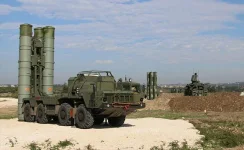
The country has already inducted four squadrons of the Russian-made S-400 Triumf system, with the fifth and final regiment from the original 2018 contract expected soon.
Driven by the system's proven effectiveness during recent border engagements, the Defence Acquisition Council (DAC) cleared the procurement of five additional S-400 regiments in March 2026. This move will eventually double the IAF's S-400 inventory to ten regiments.
At the same time, the government is placing immense faith in indigenous technology.
The Defence Research and Development Organisation (DRDO) is rapidly advancing Project Kusha, India’s own extended-range surface-to-air missile (ER-SAM) system.
Designed to rival global systems, Project Kusha will feature interceptor missiles with engagement ranges varying from 150 km to 400 km.
Five squadrons of this indigenous system have already secured government approval and are slated to join the IAF between 2028 and 2030.
Together, these acquisitions will provide India with a formidable medium-term arsenal of 15 long-range air defence (LRAD) squadrons.
While fielding 15 advanced LRAD squadrons is a monumental achievement, military strategists caution that these numbers alone do not guarantee impenetrable borders.
A frequent misunderstanding is that a missile system with a 400-kilometre range offers 400 kilometres of flat, linear protection. In truth, these systems provide circular areas of protection that are heavily influenced by the environment.
Natural obstacles like terrain, the curvature of the earth limiting radar horizons, and modern electronic warfare tactics can significantly shrink a system's effective range.
This challenge is most severe along India's Himalayan borders. The towering mountain ranges create natural blind spots that block radar signals, giving enemy aircraft places to hide. Because of this, relying on a single missile regiment to protect a vast mountainous sector is impractical.
To solve this, the military relies on the core philosophy of the "Sudarshan Chakra" vision: creating a dense grid of overlapping radar and missile zones.
If one radar station is jammed or a missile battery is taken out, another nearby system immediately steps in to cover that same airspace.
The goal is not merely to shoot down targets deep inside Chinese or Pakistani territory, but to establish a robust “denied access” zone that makes it extremely difficult and costly for enemy aircraft to operate near Indian airspace.
Establishing this impenetrable grid requires deploying multiple overlapping squadrons. Critical frontier regions like Ladakh, the Himalayas, Punjab, and Rajasthan could each require three to four dedicated LRAD squadrons to ensure constant, survivable protection.
Therefore, while the current pipeline of 10 S-400 and five Project Kusha squadrons will drastically improve India's military posture, it is unlikely to be the final ceiling.
Securing over 7,000 kilometres of challenging land borders against two nuclear-armed neighbours requires constant surveillance and significant redundancy.
Defence sources suggest that the currently approved 15 squadrons are just the foundation of a much larger, fully integrated air and missile defence architecture.
As legacy medium-range air defence systems age out and face retirement in the early 2030s, the indigenous Project Kusha will shoulder more of the burden, paving the way for further orders and an even more self-reliant defence network in the future.