Vietnam is moving closer to finalising a landmark agreement with India to purchase the BrahMos supersonic cruise missile system.
Estimated between $625 million and $700 million (approximately ₹60 billion), the potential transaction marks a pivotal advancement in India's ongoing efforts to expand its military exports within Southeast Asia.
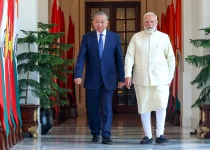
High-level diplomatic discussions gained significant momentum during Vietnamese President To Lam's state visit to India, where both nations actively reviewed bilateral military agreements under their Enhanced Comprehensive Strategic Partnership.
According to defence sources, Hanoi's immediate procurement strategy is focused on land-based coastal defence configurations.
However, the Vietnamese military has also indicated long-term strategic interest in acquiring air-launched variants of the weapon system.
Developing a Layered A2/AD Shield
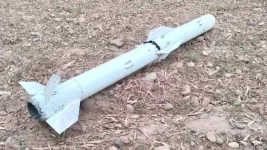
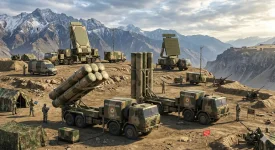
The primary operational goal for Vietnam is the swift induction of shore-based anti-ship missile batteries to safeguard its maritime borders.The proposed export package is expected to consist of three to five mobile coastal defence batteries.
This layout mirrors the operational deployment concept previously chosen by the Philippines, which became the first export customer for the shore-based BrahMos system.
The setup relies on heavy-duty, truck-mounted mobile autonomous launchers supported by dedicated radar units and command vehicles.
Once deployed, these batteries will establish a highly capable Anti-Access/Area Denial (A2/AD) shield along the Vietnamese coastline.
Amid persisting territorial tensions in the South China Sea, this capability will drastically raise Vietnam's maritime deterrence by allowing its armed forces to track and neutralise hostile naval vessels at extended standoff ranges.
Technical Advantages of the BrahMos Platform
The BrahMos missile—originally engineered through a joint venture between India's Defence Research and Development Organisation (DRDO) and Russia's NPO Mashinostroyeniya—is uniquely suited for coastal security operations.- Supersonic Speed: Traveling at speeds between Mach 2.8 and Mach 3.0, it remains one of the fastest operational cruise missiles globally.
- Low-Altitude Profile: The missile employs a sea-skimming flight path, flying just meters above the water's surface to evade radar detection.
- Minimal Reaction Time: The combination of extreme velocity and low visibility severely restricts the reaction window for an adversary's onboard air defence systems, making successful interception highly difficult.
Standoff Strike Ambitions and Aircraft Integration
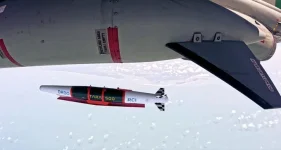
Beyond mobile ground launchers, Vietnam has explored the possibility of equipping its air force with the air-launched BrahMos-A variant.The Vietnamese Air Force operates a fleet of Russian-origin Sukhoi Su-30 fighters, which share a close structural design lineage with the Indian Air Force's Su-30MKI platforms.
Deploying the BrahMos-A would grant Vietnam a potent airborne standoff capability, allowing pilots to engage maritime targets from distances of 300 to 450 kilometres.
However, standard BrahMos-A missiles weigh approximately 2.5 tons, requiring extensive structural reinforcements to the aircraft's underbelly hardpoints, alongside complex avionics integration. These technical demands could potentially delay immediate deployment for Hanoi.
| Missile Variant | Average Weight | Primary Platform | Current Development Status |
|---|---|---|---|
| BrahMos-A | ~2,500 kg | Su-30MKI / Su-30 | Fully Operational (Inducted by IAF) |
| BrahMos-NG | ~1,200–1,500 kg | Su-30MKI, Tejas LCA, MiG-29 | Advanced Design & Autonomous Testing Stage |
The BrahMos-NG Alternative
To bypass structural limitations, Vietnam is closely monitoring the progress of the BrahMos-NG (Next Generation) variant.The NG model is designed as a much lighter and more compact derivative, weighing between 1.2 and 1.5 tons.
This reduced footprint allows a single Su-30 fighter to carry multiple missiles per sortie and opens the door for integration onto lighter combat aircraft down the road.
Manufacturing facilities for this lighter variant are being modernised, with autonomous testing and initial flight samples progressing steadily. Vietnam’s long-term air-launched requirements may ultimately be timed to match the operational readiness of the BrahMos-NG.
Geopolitical Implications and Regional Precedents
Navigating the export of a high-tier weapon system like BrahMos involves careful management of international technology frameworks, particularly given the system's shared Indo-Russian development background.For Vietnam, finalized negotiations must also carefully balance regional diplomatic ties and potential reactions from Beijing.
Nevertheless, India has successfully established a clear legal and bureaucratic precedent through its previous $375 million export contract with the Philippines and parallel defence procurement talks with Indonesia.
These established channels have streamlined the export process, smoothing the pathway for India to supply advanced precision-guided weapons to other ASEAN members.
If finalized, the contract will firmly establish India as a reliable security exporter in the Indo-Pacific region.
For New Delhi, securing the Vietnamese contract validates the global commercial potential of its domestic defence sector and deepens strategic ties with key Southeast Asian partners under its broader "Act East" foreign policy framework.