In a major stride towards self-reliance under the 'Aatmanirbhar Bharat' initiative, Armoured Vehicles Nigam Limited (AVNL) has unveiled a comprehensive strategy to design and manufacture a new domestic family of combat vehicle engines.
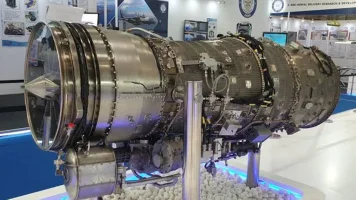
Ranging from 400 to 1,500 horsepower (HP), these new power packs will upgrade aging Russian-designed equipment and power India’s next generation of homegrown armoured platforms, ensuring enhanced battlefield survival, speed, and tactical versatility.
As a key state-owned enterprise formed from the restructuring of the Ordnance Factory Board, AVNL is positioning itself as the cornerstone of India’s military mobility.
Revitalising the Infantry and Wheeled Fleets
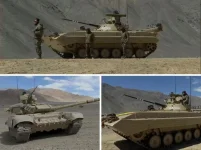
At the lighter end of the spectrum, AVNL is focused on overhauling India's mechanised infantry capabilities.- BMP-II Upgrades (400 HP): The company is engineering a 400 HP motor designed to replace the legacy 300 HP Russian engines currently powering the BMP-II infantry combat vehicles, known locally as the 'Sarath'. This targeted upgrade will drastically improve the vehicle's acceleration and power-to-weight ratio, allowing it to navigate the steep inclines of high-altitude borders and the deep sands of desert sectors with far greater ease.
- Wheeled Armoured Vehicles (600 HP): Simultaneously, AVNL is crafting a 600 HP engine dedicated to modern 8x8 wheeled armoured vehicles. Militaries worldwide are increasingly favouring wheeled platforms for their rapid deployment capabilities and reduced maintenance needs. Producing more power for this class will allow the Indian military to mount heavier weaponry and thicker armour without sacrificing the vehicle's crucial off-road speed.
Powering the Heavyweight Champions
The most ambitious aspects of AVNL's roadmap are reserved for the heavy tank divisions, where massive horsepower is required to move dozens of tons of steel across rugged terrain.- T-90 MkIII Enhancements (1350 HP): To keep the formidable T-90 fleet combat-ready for the coming decades, AVNL is developing a 1,350 HP engine. This significant boost in power will give the main battle tanks superior agility, a vital trait for outmaneuvering adversaries in high-stakes, fast-paced combat environments.
- Next-Generation Tanks (1500 HP): Looking to the future, AVNL is actively working on a flagship 1,500 HP power pack. This heavy-duty engine is custom-built for upcoming heavyweight projects, including advanced iterations of the indigenous Arjun tank and the highly anticipated Next Generation Main Battle Tank (NGMBT). As modern tanks are outfitted with heavier composite armour, active protection systems, and power-hungry electronic warfare jammers, a 1,500 HP engine is an absolute necessity to prevent the vehicle from becoming sluggish.
Navigating Engineering Hurdles and Future Tech
Manufacturing military-grade engines of this calibre is a monumental technical hurdle.It demands mastering complex metallurgy to withstand internal stresses, developing advanced cooling systems to prevent overheating, and maintaining absolute precision during manufacturing.
Furthermore, these engines must undergo grueling trials to prove they will not fail when exposed to the extreme dust, heat, and cold typical of front-line defence operations.
Beyond traditional diesel mechanics, AVNL is also exploring the frontier of military propulsion: hydrogen power. While still in the conceptual phase, developing hydrogen-based power packs could revolutionise armoured warfare.
Hydrogen fuel cells operate with significantly less noise and emit far less heat than traditional combustion engines, making the vehicles incredibly difficult for enemy thermal imaging cameras to detect.
Additionally, it offers a sustainable, highly efficient energy alternative for the armed forces.
By securing the supply chain for everything from light troop carriers to heavy main battle tanks, AVNL's multi-tiered strategy is set to dramatically reduce India's reliance on foreign propulsion systems and cement the nation's independence in defence manufacturing.