The Defence Research and Development Organisation (DRDO) continues to expand the frontiers of unmanned aerial technology with a pioneering initiative under its Technology Development Fund (TDF) scheme.
This new project aims to develop sophisticated "close formation flying" capabilities, allowing multiple drones to coordinate with such precision that they effectively function as a single, massive aerial system.
A Floating "Virtual" Antenna
The core objective of this ambitious programme is to create a swarm of Unmanned Aerial Vehicles (UAVs) that can maintain a rigid, precise formation in mid-air.In this configuration, each drone carries a specific radiating element—a transmitter or receiver.
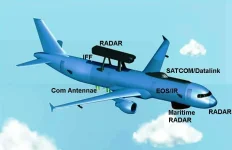
When operating in unison, the swarm acts as a "distributed phased array" or a virtual antenna. This allows the cluster of small drones to generate powerful radio frequency (RF) beams for communication, radar sensing, and electronic warfare (EW) that would typically require a much larger, heavier, and more expensive single-platform aircraft.
Furthermore, the swarm is dynamically reconfigurable; it can change its shape in real-time to alter the antenna's beam width or direction, adapting instantly to fresh operational requirements.
Overcoming Technical Hurdles
Executing this concept requires overcoming significant engineering challenges, particularly regarding stability and communication.For the "virtual antenna" to work, the drones must maintain their relative positions with centimetre-level accuracy, often while flying just metres apart. This necessitates the use of advanced navigation systems that can operate even when satellite navigation (GPS/NavIC) is denied.
Additionally, the project places a heavy emphasis on Electronic Counter-Countermeasures (ECCM). Since the swarm relies on constant data sharing to stay coordinated, the communication links between the drones must be robust enough to withstand enemy jamming attempts in contested airspace.
Strategic Implications and Industry Partnership
This initiative holds immense potential for modern asymmetric warfare.A distributed swarm is far harder to disable than a single large radar plane; if one drone is lost, the swarm can autonomously reshuffle to maintain functionality.
The technology promises to be a force multiplier in surveillance and electronic intelligence (ELINT) missions.
By channelling this project through the TDF, the DRDO is actively seeking to engage Indian MSMEs (Micro, Small and Medium Enterprises) and defence startups.
This collaborative approach not only accelerates the prototyping of such futuristic systems but also aligns with the government's Aatmanirbhar Bharat vision, ensuring that critical intellectual property for next-generation swarm logic and distributed sensing remains within the country.