- Views: 32
- Replies: 1
In a significant move that could redefine the future of aerial warfare, the Research Centre Imarat (RCI) of the Defence Research and Development Organisation (DRDO) has invited Indian private companies and start-ups to collaborate on the development of quantum-based avionic sensors.
These advanced technologies are considered the essential core of sixth-generation combat aircraft.
From Science Fiction to Strategic Reality
Quantum avionics represents a major technological leap beyond current fifth-generation fighter jet capabilities. While modern aircraft like the Rafale rely on Active Electronically Scanned Array (AESA) radars and electronic warfare suites, future air dominance systems will require superior performance.The new quantum systems aim to provide pilots with near-perfect situational awareness even in the most hostile environments. This includes scenarios where GPS signals are blocked, communication lines are jammed, and traditional stealth features are compromised by enemy low-frequency radars.
This initiative aligns with the broader National Quantum Mission, under which the Indian government is actively funding deep-tech start-ups to achieve self-reliance in quantum technologies.
Three Pillars of the Quantum Revolution
RCI is focusing its development efforts on three specific quantum domains:- Quantum Inertial Navigation: This technology promises navigation accuracy within centimetres, even after flying for hours without satellite guidance (GNSS). This ensures that aircraft can operate effectively in "GPS-denied" zones.
- Quantum Magnetometry: By detecting minute changes in magnetic fields, these sensors can identify submerged submarines or buried Improvised Explosive Devices (IEDs) from high altitudes, effectively turning a fighter jet into a powerful intelligence-gathering asset.
- Quantum Radar and Lidar: Using the principles of quantum mechanics, such as entangled photons, these radars can detect "stealth" aircraft that are invisible to conventional radar systems.
RCI aims to replicate and expand this success for the Indian Air Force.
The Challenge of Miniaturisation
RCI has already achieved success in developing laboratory-scale quantum accelerometers and magnetometers. These devices have demonstrated sensitivity levels far superior to the ring-laser gyroscopes currently used in the Tejas and Rafale aircraft.However, the primary challenge lies in transforming these delicate laboratory instruments into rugged, compact units.
These sensors must be able to withstand the extreme conditions of aerial combat, including the intense vibrations and thermal stress of flying at speeds exceeding Mach 2 and executing 9g manoeuvres.
A New Era of Partnership
To address these engineering hurdles, RCI Director B.H.V.S. Narayana Murthy has opened the programme to the private sector through the Technology Development Fund (TDF) and Innovations for Defence Excellence (iDEX) initiatives.Historically, DRDO projects were developed strictly within government laboratories. This new approach recognises that specialised expertise in areas such as silicon photonics, cryogenic cooling, and single-photon detectors often resides within India’s burgeoning start-up ecosystem.
Companies working with advanced materials, such as diamond NV-centres (Nitrogen-Vacancy), are being quietly approached for joint development partnerships.
Strategic Implications for AMCA and Beyond
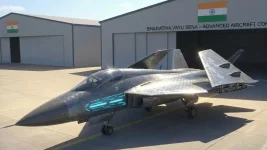
The ultimate goal of this collaboration is to produce flight-worthy quantum sensor modules for integration into the AMCA Mk2 and future sixth-generation platforms, which represent the next phase of India's aerospace roadmap.The operational benefits are profound. A quantum inertial navigation system is immune to jamming or "spoofing," providing Indian pilots with a "fly-through-denial" capability over contested borders.
Furthermore, the ability to detect stealth platforms using quantum radar would neutralise the technological advantage of adversaries operating advanced stealth fighters.
Industry sources indicate that RCI is prepared to fund up to 90 per cent of the development costs for selected partners.
This funding comes with a commitment to full technology transfer and a clear path to production, with the strict condition that all resulting technology—from the chip level to the final aircraft integration—must remain indigenous.