US-based aviation giant GE Aerospace has officially handed over its sixth F404-IN20 engine to India's state-run Hindustan Aeronautics Limited (HAL).
While this marks a necessary step forward for the indigenous Tejas Mk1A fighter jet project, the delivery volume remains well below expectations.
By the close of the financial year on March 31, GE had supplied only six engines, missing its revised target of 11 units for the period.
This development was confirmed following inquiries into the ongoing supply chain bottlenecks affecting the project.
A spokesperson for GE Aerospace stated that this latest handover is part of the existing 2021 procurement contract.
The company highlighted that it is in continuous communication with HAL to monitor production timelines and ensure that future deliveries become more predictable.
However, the sixth engine is not yet on Indian soil. HAL officials have clarified that the physical handover took place at a GE facility in the United States, and the engine is currently awaiting freight transit.
This situation points to the broader logistical and shipping hurdles that are further stretching out the already delayed production schedule.
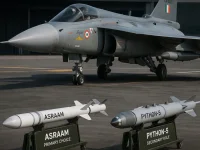
The F404-IN20 power plant is the heart of the Tejas Mk1A. Back in August 2021, India finalised a massive $716 million contract with GE for 99 of these engines to power a fleet of 83 new fighter jets for the Indian Air Force (IAF).
GE dispatched the first engine of this order in March of last year, followed by four more by December 2025, bringing the total physically in India to five before this latest American handover.
Officials within the Indian defence sector note that GE Aerospace blames these delivery bottlenecks on the ripple effects of the ongoing geopolitical crises in West Asia, specifically the tensions involving the United States, Israel, and Iran.
These international conflicts have severely disrupted global aerospace supply chains, slowing down the manufacturing and shipping of critical sub-assemblies and engine components.
These persistent propulsion shortages present a major roadblock for HAL’s assembly lines, pushing back the delivery of combat-ready aircraft to the military.
The IAF urgently needs the Tejas Mk1A to replace its aging Soviet-era jets and address its shrinking fighter squadron numbers. Without a swift resolution to these supply chain problems, the Air Force's fleet modernisation plans will face even greater delays.
Looking ahead, HAL Chairman and Managing Director D.K. Sunil recently confirmed that GE has offered assurances to deliver 20 more F404 engines in the second half of 2026.
While HAL currently has multiple Mk1A aircraft structures ready and waiting for their engines, the IAF is expected to closely review the programme's progress in May before formally accepting the first batch of these critically needed fighters.