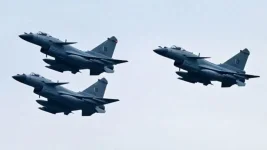
A new geopolitical concept is gaining traction within diplomatic circles, raising the prospect that the existing trilateral cooperation between Greece, Cyprus and Israel could expand into a broader "Mediterranean QUAD" or "Med QUAD".
Strategic analysts suggest this proposed alignment is designed to serve as a counterbalance to an emerging bloc led by Turkey, often referred to as an "Islamic NATO," which reportedly draws support from Pakistan and Saudi Arabia.
Reports indicate that Athens is actively exploring the inclusion of India in this Mediterranean framework to bolster its regional alliances.
The current partnership between Greece, Cyprus and Israel is already well-established, driven by mutual security concerns in the Eastern Mediterranean.
Their collaboration focuses heavily on maritime security, energy resource exploration and the mitigation of regional instability.
Over the last ten years, this relationship has matured from simple political discussions into tangible cooperation, including joint defence exercises, intelligence sharing and the coordination of energy infrastructure projects.
By transforming this trilateral format into a "Med QUAD," Athens seeks to formalise these ties and increase the group's strategic influence.
This proposal is becoming increasingly relevant in light of Turkey’s expanding network of military and political alliances.
Ankara has steadily reinforced its defence ties with Pakistan and has pursued closer alignment with Saudi Arabia and other Muslim-majority nations on strategic and security matters.
Although this developing axis lacks the formal treaty structure of a traditional alliance, it is informally dubbed an "Islamic NATO."
From the Greek viewpoint, this alignment poses a significant long-term challenge to the security architecture of both the Mediterranean and the wider Indo-Pacific regions.
Integrating India into a Mediterranean-centric group would represent a major shift in the geopolitical landscape.
New Delhi is already a key member of the Indo-Pacific QUAD alongside the United States, Japan and Australia, playing a pivotal role in balancing China’s influence in Asia.
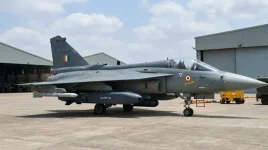
Greece’s interest in inviting India to join a Med QUAD acknowledges India’s growing naval capabilities and its increasing presence in the Mediterranean, evidenced by recent port access agreements, participation in joint military drills—such as the Indian Air Force’s involvement in the ‘Iniochos’ exercise—and significant commercial shipping interests.
For India, joining such a framework would significantly extend its strategic footprint westward, deepening its engagement with Europe and the Middle East.
This move aligns with India's established policy of advocating for freedom of navigation and stability in critical maritime routes, particularly those linking the Indian Ocean to the Mediterranean via the Suez Canal.
Furthermore, this cooperation supports the vision of the India-Middle East-Europe Economic Corridor (IMEC), which aims to create a seamless trade route connecting India to Europe.
However, New Delhi would need to navigate this involvement carefully to avoid entanglement in regional rivalries that could strain its relations with Turkey or Gulf nations.
If established, a Mediterranean QUAD would likely operate not as a binding military pact, but as a mechanism for strategic coordination.
Its primary focus would be on maritime security, the protection of energy infrastructure and counterterrorism efforts. In this regard, it would mirror the Indo-Pacific QUAD’s model of flexible cooperation rather than treaty-based mutual defence obligations.
Nevertheless, the symbolic value of such a grouping would be substantial, sending a clear signal that Greece and its partners are building a broad coalition to offset Turkey’s rising influence and its alignments with Pakistan and Saudi Arabia.
Currently, the Med QUAD remains a strategic proposal rather than a concrete policy. However, its emergence highlights a broader global trend where regional powers form flexible coalitions to hedge against changing balances of power.
Whether India eventually joins this framework will depend on the clarity of the initiative’s objectives and its alignment with India’s strategic interests in Europe and the Mediterranean.
Ultimately, it is evident that Greece is actively seeking new diplomatic and security structures to fortify its standing in the Eastern Mediterranean.
The concept of a Mediterranean QUAD illustrates how regional disputes are increasingly influenced by global partnerships, blurring the traditional boundaries between European, Middle Eastern and Indo-Pacific geopolitics.
If this idea evolves beyond rhetoric, it could signal the start of a new multilateral security equation in the Mediterranean with far-reaching implications.