The landscape of India’s unmanned military aviation is rapidly transforming.
Recent updates reveal that the Defence Research and Development Organisation (DRDO) is now focusing its primary resources on the Futuristic Unmanned Fighter Aircraft (FUFA) over the heavier Remotely Piloted Strike Aircraft (RSPA).
This strategic pivot highlights a move toward ultra-fast, stealthy drone systems designed specifically to meet the complex demands of modern, sixth-generation aerial warfare.
The shift in developmental strategy was recently confirmed by Dr. Ganesan S of the Gas Turbine Research Establishment (GTRE).
He noted that the FUFA initiative is taking precedence over the older RSPA project—a 13-to-15-ton strike drone programme often associated with Project Ghatak.
While the RSPA was conceptualised as a bulky, heavy-duty bomber, the newly prioritised FUFA will be a sleeker, lighter, and vastly more technologically ambitious combat system.
Positioned as a cutting-edge, sixth-generation Unmanned Combat Aerial Vehicle (UCAV), the FUFA is engineered for survival in heavily contested and defended enemy territories.
Expected to weigh in the 7-to-10-ton bracket, this tailless, flying-wing aircraft will rely on advanced artificial intelligence, stealth geometry, and robust data-link networking.
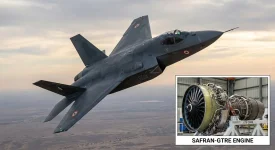
To achieve rapid speeds and carry internal weapons, the platform is expected to be equipped with a Kaveri Derivative Engine (KDE), underlining India’s ongoing commitment to indigenous aviation powerplants.
Currently, official disclosures remain scarce, but statements from Dr. Ganesan imply that FUFA may initially take to the skies as a technology demonstrator rather than a mass-produced weapon system.
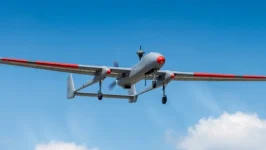
This approach directly mirrors the trajectory of its predecessor, the one-ton SWiFT (Stealth Wing Flying Testbed).
The SWiFT programme has already completed multiple successful flight trials—including validating autonomous take-offs and landings—proving the viability of India’s low-observable aviation designs.
Expanding on the foundational success of the SWiFT, the FUFA project aims to integrate highly sophisticated features into a larger airframe.
These proposed upgrades include supersonic cruising capabilities, advanced radar-evading stealth shaping, and the critical integration of Manned-Unmanned Teaming (MUM-T) protocols.
One of the most highly anticipated roles for the FUFA is acting as a "loyal wingman" alongside India’s upcoming Advanced Medium Combat Aircraft (AMCA).
Operating in tandem with piloted jets, the stealthy drone could carry advanced beyond-visual-range payloads in its internal weapon bays, such as the indigenous Astra MkII and MkIII air-to-air missiles.
This cooperative MUM-T approach ensures that human pilots in the AMCA can remain at safer, stand-off distances.
They would seamlessly command the autonomous FUFA drones to push forward, identify threats using onboard AESA radars, and engage hostile targets—a core tactic that is rapidly becoming the gold standard in future air combat strategies globally.
While the strategic intent is clear, the DRDO has yet to reveal the full roadmap for the FUFA programme.
Crucial data regarding its final configuration, operational limits, and exact deployment timelines remain classified as the project is still maturing.
Nonetheless, sidelining the RSPA in favour of the FUFA confirms a decisive pivot: India's defence establishment is investing heavily in rapid, stealthy, and highly adaptable unmanned fighters capable of fighting side-by-side with tomorrow’s piloted jets.