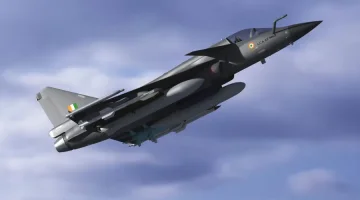
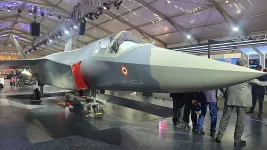
The Advanced Medium Combat Aircraft (AMCA) programme, India’s flagship project to develop a fifth-generation stealth fighter, has entered a critical phase of industrial negotiation.
Following widespread media reports suggesting Hindustan Aeronautics Limited (HAL) had been excluded from the initial development list, HAL Chairman and Managing Director D.K. Sunil clarified the situation in a recent interview.
Speaking to CNBC-TV18, Mr Sunil stated that the current Request for Information (RFI) is strictly limited to the manufacturing of five AMCA prototypes. He emphasised that this selection process does not guarantee a contract for mass production.
According to his assessment, once the development phase concludes, the government is likely to issue a fresh tender for the long-term production of the aircraft. HAL intends to bid aggressively for this manufacturing contract, even if it does not lead the initial prototype phase.
Decoupling Development from Mass Production
This clarification is vital as the AMCA represents the most sophisticated aerospace challenge India has ever undertaken.The prototype phase focuses on validating critical technologies, including stealth geometric shaping, internal weapon bays, and complex flight control systems.
The government’s current strategy appears to decouple prototype development from large-scale manufacturing.
By doing so, policymakers retain the flexibility to evaluate the industrial readiness of various players—specifically private sector consortia such as those led by Tata, Larsen & Toubro, and Bharat Forge—before committing to a multi-decade production run.
This approach theoretically allows for performance benchmarking and risk mitigation before the aircraft enters serial production, currently targeted for 2035.
The Risks of Transitioning Aerospace Knowledge
However, experts caution that separating development from production is rarely straightforward in aerospace engineering.The entity that builds the prototypes inevitably gains invaluable institutional knowledge, including specific tooling requirements, supply chain management, and specialised workforce training.
While transferring the production line to a different company after the prototype phase is technically feasible, it often creates significant "learning curves."
Without careful management, this transition can lead to cost overruns and delays, as the new production partner must relearn processes that the developer has already mastered.
HAL’s Strategic Outlook on the AMCA Ecosystem
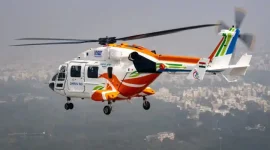
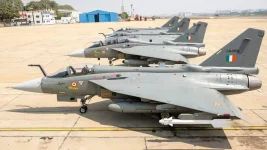
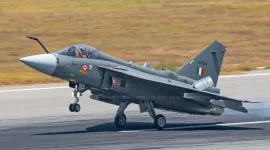
From HAL’s vantage point, the statement from its leadership serves two strategic purposes.Firstly, it reassures stakeholders that even if HAL is not the primary agency for the prototype—potentially due to its massive existing order book for Tejas Mk1A fighters and Prachand helicopters—it remains a core part of the AMCA ecosystem.
Secondly, it signals that mass production is a separate commercial opportunity. HAL argues that its extensive infrastructure for fighter jet assembly, lifecycle maintenance, and systems integration makes it a natural candidate for the eventual production phase, regardless of who builds the initial test units.
Comparing Continuity and Competitive Diversification
Industry analysts observe that while the "split" strategy is possible, continuity is often the preferred path in global aviation.If a private "Development-cum-Production Partner" (DcPP) successfully delivers the prototypes, keeping them for the production phase typically ensures smoother scalability. Utilising the same tooling, quality assurance processes, and trained personnel helps maintain schedule discipline.
Conversely, bringing in a new manufacturer for serial production creates a parallel industrial base, which broadens India's defence capabilities but carries the risk of extending timelines in a project where speed is essential to counter regional threats like the J-20 and J-35.
Modernisation Plans and Future Timelines
The development roadmap of the AMCA is intrinsically linked to the Indian Air Force’s long-term modernisation plans. Decisions regarding the allocation of prototype and production responsibilities will directly impact the cost and delivery timeline of the jet.While the introduction of competitive bidding aims to foster efficiency and private sector participation, complex stealth programmes often benefit from industrial stability.
The upcoming first flight, targeted for late 2028 or 2029, will be a key indicator of whether this new multi-partner model can deliver results on time.
Shaping India’s Aerospace Strategy
Dr Sunil’s comments have added nuance to the ongoing debate about India's aerospace industrial strategy.By framing the current RFI as a milestone rather than a final verdict, he has kept the door open for HAL’s future involvement.
The ultimate decision—whether to stick with the prototype developer or reopen competition for production—will shape the trajectory of India’s high-tech manufacturing sector for decades.
For the moment, the industrial structure for the AMCA remains flexible.
HAL’s public stance reflects confidence in its institutional capabilities, while the government’s approach highlights a delicate balancing act: accelerating the delivery of a potent stealth fighter while simultaneously trying to cultivate a resilient, diverse domestic aerospace base.
As the selection process for the prototype partner advances, global and domestic observers will be watching closely to see how this strategy transitions from development success to long-term production reality.