Hindustan Aeronautics Limited (HAL) has released a compelling visual testament to the manufacturing progress of India’s indigenous Light Combat Aircraft (LCA) Tejas Mk1A programme.
Recent images from HAL's facilities display an impressive lineup of 18 single-seater Tejas Mk1A fighter jets resting on the tarmac.
This display showcases the growing industrial momentum behind the Indian Air Force's (IAF) crucial fleet upgrade, which currently includes a contracted order for 83 jets and an approved follow-on order for 97 more, aimed at replacing the IAF's ageing MiG-21 squadrons.
Among the 18 advanced fighters shown, eight have been successfully integrated with their powerplants and are classified under Category A or B readiness, putting them on the verge of final assembly and flight trials.
Conversely, the remaining airframes currently sit without engines, illustrating HAL's strategy of pushing forward with structural completion while waiting for the delivery of the essential General Electric F404-IN20 turbofan engines.
Reports indicate that global supply chain bottlenecks have caused GE Aerospace to miss recent delivery targets, temporarily grounding several fully built airframes and pushing the anticipated handover of the first operational batch to the IAF into 2026.
In addition to the extensive row of single-seat fighters, another photograph revealed two LCA two-seater trainers positioned alongside other Mk1A jets.
A major highlight in this group is the first Tejas Mk1A trainer variant, situated prominently in the top right, which is clearly outfitted with an aerial refuelling probe.
This critical modification introduces mid-air refuelling to the two-seater model, substantially increasing its flight endurance and providing the IAF with expanded operational and training flexibility.
The integration of a refuelling probe on the trainer aircraft is part of a wider series of enhancements defining the Mk1A family, which prioritises greater range, state-of-the-art avionics, and versatile multirole capabilities.
The twin-seat trainers are essential for safely transitioning pilots into the highly advanced single-seat variants, guaranteeing that the IAF maintains a steady pipeline of combat-ready aviators as the Tejas fleet rapidly expands over the coming decade.
Beyond mere production volume, the showcased aircraft also drew attention to the Tejas Mk1A’s heavily upgraded combat lethality.
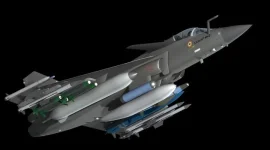
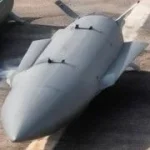
One of the featured jets was seen equipped with an Advanced Self Protection Jammer (ASPJ) pod alongside a newly developed dual pylon configuration carrying Advanced Short Range Air-to-Air Missiles (ASRAAM).
This innovative dual pylon system, mounted on the outboard wing station, permits the fighter to carry two of the highly agile, 88-kg ASRAAM close-combat missiles on a single hardpoint.
This arrangement dramatically multiplies the aircraft's short-range firepower without sacrificing space for other vital payloads like precision-guided bombs or external fuel tanks.
Pairing the MBDA-designed ASRAAMs with the external ASPJ pod for electronic warfare defence clearly demonstrates the Mk1A’s modernised focus on pilot survivability and battlefield dominance.
When combined with the indigenous Uttam Active Electronically Scanned Array (AESA) radar and a comprehensive electronic warfare suite, these upgrades elevate the Tejas Mk1A far beyond the capabilities of the baseline Mk1.
It is now positioned as a highly capable 4.5-generation fighter, meticulously customised to meet the rigorous demands of modern Indian aerospace defence.
Ultimately, the striking visual composition of this aircraft lineup represents far more than just a count of airframes; it signifies genuine technological maturation.
By simultaneously displaying heavily armed jets, newly upgraded trainers, and airframes progressing through serial production, HAL is sending a strong message that the programme has definitively moved past the prototype phase.
Despite the ongoing hurdles regarding foreign engine supplies, this tangible output on the tarmac serves as a clear signal of HAL’s commitment to accelerating mass production and delivering on its promises to the nation's defence forces.