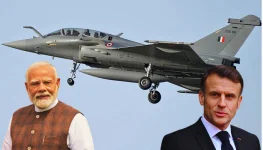
The visit of French President Emmanuel Macron to India this week marks a pivotal moment in international aerospace politics.
While the AI Impact Summit and high-level diplomatic talks are on the agenda, the centerpiece of the visit is the anticipated finalisation of the Multi-Role Fighter Aircraft (MRFA) program.
Following years of strategic planning and bureaucratic navigation, the Indian government recently cleared the proposal for 114 Rafale fighter jets, with formal agreements expected between February 17 and 20, 2026.
A Landmark Shift in Defence Procurement
This agreement represents far more than a standard arms acquisition; it is a cornerstone of India’s long-term defence modernisation.The IAF's requirement for these jets stems from a decade-long need to phase out ageing fleets and maintain a qualitative edge in regional airspace.
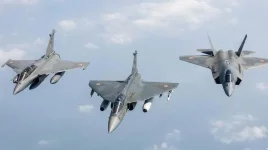
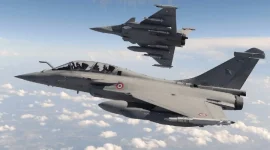
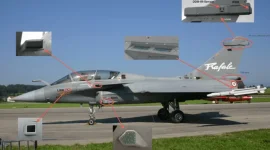
India already operates a fleet of 36 Rafale jets and has previously committed to 26 naval Rafale-M variants.
With the addition of these 114 aircraft, India is set to become one of the world's premier operators of the French-made platform.
The deal, estimated to be valued between $35 billion and $40 billion, serves as a primary engine for the "Make in India" initiative.
Localisation and Economic Impact
The structural highlight of the deal is the domestic production roadmap. While approximately 18 to 20 jets will be delivered directly from France by 2030, the remaining 94 aircraft are slated for assembly within India.- Industrial Scaling: New manufacturing facilities will be established to handle the bulk of the order.
- Technological Transfer: India aims to achieve up to 80% indigenous content over the life of the program.
- Engine Manufacturing: Safran, the manufacturer of the M88 engine that powers the Rafale, is planning to establish local production lines. This move not only supports the Rafale fleet but provides a technical foundation for future indigenous Indian fighter programs.
Strained Global Supply Chains
The sheer scale of the Indian order is set to recalibrate the global supply chain for Dassault Aviation. By the end of 2025, the company already maintained a substantial backlog of 220 aircraft. This new contract could push total orders beyond 330 units.| Metric | Current Status (Approx.) | Post-India Deal Impact |
|---|---|---|
| Firm Backlog | 220 Aircraft | 330+ Aircraft |
| Annual Production (2025) | 26 Units | Target Increase Required |
| Indian Fleet Total | 62 (36 Air Force + 26 Navy) | 176+ Aircraft |
While Dassault is working to accelerate production rates, the influx of Indian orders may result in extended waiting periods for other nations seeking the platform.
Implications for Global Security: The Ukraine Context
The timeline for the Indian acquisition has significant secondary effects on other nations, most notably Ukraine. In late 2025, Kyiv expressed a formal intent to acquire up to 100 Rafales to bolster its aerial defence capabilities alongside other Western platforms.However, with India securing priority slots on the French production lines for the first 20 units and locking in long-term technical resources for the remainder, Ukraine's potential delivery schedules may be delayed deep into the 2030s.
Much like India, Ukraine has explored local assembly models to bypass these bottlenecks, but the challenges of establishing high-tech manufacturing during an active conflict remain a formidable barrier.