- Views: 36
- Replies: 2
The Indian Air Force (IAF) is approaching a major milestone in modern combat with the upcoming introduction of the Ghatak Unmanned Combat Aerial Vehicle (UCAV).
Recently cleared by the Defence Acquisition Council for a projected four squadrons, this 13-ton stealth drone carries an estimated price tag of ₹600 crore (around $63 million) per unit.
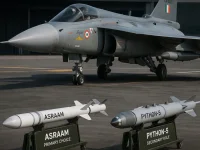
Interestingly, this acquisition cost is remarkably similar to the IAF's newest manned fighter, the Tejas Mk1A, which is currently valued between ₹640 and ₹680 crore ($67 to $72 million) per aircraft.
Despite the comparable upfront price, the Ghatak brings unique, game-changing advantages to the battlefield that traditional fighters like the Tejas cannot match.
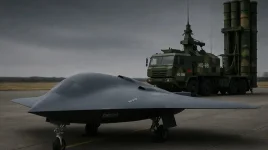
Built as a tailless flying wing to ensure a minuscule radar cross-section, the drone is designed to secretly penetrate highly guarded enemy territories and perform precise strikes without putting any human lives in danger.
This core distinction ultimately leads to massive financial benefits for the military, as the unmanned platform drastically reduces operational spending while completely safeguarding valuable pilots.
While purchasing the two aircraft might cost the same, their actual operating expenses contrast heavily during deep-strike operations.
Sending a manned Tejas Mk1A into hostile skies requires a large, coordinated team of support aircraft.
Military strategists must deploy additional fighters to suppress enemy air defences, radar-jamming planes, mid-air refuelling tankers, and airborne early-warning systems.
Every single aircraft in this formation consumes expensive fuel and requires extensive maintenance.
With the hourly flight cost of a Tejas ranging from $4,000 to $8,000, a standard four-hour mission for just one fighter can cost up to $32,000.
Once the necessary support fleet of six to eight planes is factored in to guarantee the pilot's safety, the total price for a single operation easily surges into the hundreds of thousands of dollars.
The Ghatak fundamentally alters this financial model.
Thanks to its advanced stealth geometry—proven successful during the SWiFT technology demonstrator flights—and autonomous flight capabilities, the drone can bypass complex air-defence shields that would easily spot a conventional fighter.
A Ghatak mission does not require any protective escorts, refuelling tankers, or onboard crew, bringing the secondary mission costs down to almost nothing.
Equipped with a fuel-efficient, dry variant of the indigenous Kaveri engine and an internal payload bay capable of holding up to 1.5 tons of munitions, its operational expenses are remarkably low.
Since it lacks heavy life-support equipment and is immune to human fatigue, the hourly flight cost of the UCAV is expected to be under $2,000.
This means a Ghatak can conduct a deep-strike mission for less than half the cost of a Tejas-led operation, all while delivering highly accurate firepower.
The most significant financial advantage becomes clear when factoring in the risks of combat.
Historically, penetrating heavily fortified enemy airspace results in a 5 to 15 percent loss rate for manned aircraft, even when fully supported.
If a Tejas Mk1A is shot down, the military loses $70 million in equipment, alongside the tragic loss of a pilot.
Transforming a recruit into a combat-ready aviator takes years of intense training and millions of dollars in investment.
Furthermore, losing a pilot forces the air force to spend valuable time and resources training a replacement.
The Ghatak completely removes these tragic and costly scenarios from the equation.
If the UCAV is destroyed, the military only loses the physical machine. There is no loss of life, no blow to squad morale, and no need to fund a new pilot's education.
Across the planned fleet of 60 to 80 units, keeping pilots out of harm's way will save the IAF hundreds of millions of dollars over the drone's first ten years of operation.
Long-term maintenance and lifecycle expenses also strongly favour the drone.
Traditional jets demand constant expenditures for pilot flight-hour currency, medical checks, and mandatory rest periods, which inherently limits how often the aircraft can fly.
In contrast, the Ghatak can loiter in the air for extended periods, operate from frontline airstrips with minimal support staff, and execute back-to-back missions without worrying about pilot exhaustion.
Upkeep is also much simpler and cheaper, as technicians do not have to maintain complex cockpits, oxygen systems, or ejection seats.
When defence experts calculate these factors over a yearly campaign of 200 deep-strike missions, the Ghatak fleet achieves the exact same military goals as manned fighters but at a 40 to 60 percent reduction in overall costs.
Looking past the immediate financial figures, this UCAV provides a level of tactical adaptability that is incredibly valuable.
By assigning the most dangerous "first-wave" strikes and air-defence suppression missions to the Ghatak, the IAF can reserve its Tejas squadrons for defending Indian airspace and engaging in dogfights, where a human pilot's quick decision-making is essential.
This strategy allows the military to achieve its goals with fewer total aircraft.
During a drawn-out war, the financial savings would multiply quickly due to fewer destroyed aircraft and the preservation of experienced pilots.
Military strategists project that transferring merely 30 percent of deep-strike duties to the Ghatak fleet could save the nation between $1 billion and $2 billion over 15 years, purely by avoiding combat losses and lowering mission support costs.