In May 2025, ahead of the strategic strikes of Operation Sindoor, the Indian Army executed a monumental feat of military logistics.
Following the Pahalgam attack, a complete Akash air defence regiment was urgently redeployed from India's eastern sector to the north-western frontiers.
Their objective was to secure the airspace along the Line of Control (LoC) and international border against anticipated retaliatory drone and missile strikes from Pakistan during Op Sindoor.
Moving an entire missile regiment thousands of kilometres in a single, continuous journey required extraordinary planning, coordination, and endurance.
The Indigenous Shield
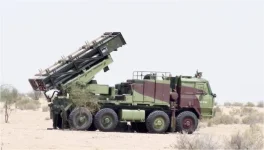
Designed by the Defence Research and Development Organisation (DRDO) and produced by domestic manufacturers, the Akash medium-range surface-to-air missile (SAM) system is a highly mobile, all-weather platform.It is a critical layer in India's airspace security, known for the following capabilities:
- Multi-Target Engagement: Can track and neutralise multiple aerial threats simultaneously, including drones, fighter aircraft, and cruise missiles.
- Operational Range: Capable of engaging targets at ranges of up to 25–30 kilometres.
- High Mobility: Mounted on a mix of tracked and wheeled vehicles, engineered for rapid relocation and deployment in diverse terrains.
A Self-Sustaining Convoy
To ensure uninterrupted momentum, the military convoy was designed to be entirely self-sufficient.Pre-departure inspections were swift but meticulous. The column integrated its own fuel tankers, ammunition carriers, and mobile mechanical teams, completely removing the need to stop at external supply nodes.
Operating under strict electronic discipline and radio silence to evade enemy surveillance, the convoy primarily moved under the cover of darkness.
The route avoided predictable main highways, instead utilising a complex network of secondary roads and cross-country paths.
Drivers worked in continuous rotational shifts, bringing the heavy vehicles to a halt only for essential refuelling and rapid maintenance.
Combat-Ready in Transit
The most impressive aspect of this cross-country dash was the regiment's ability to remain operationally active while on the move.The Akash system’s mobile radars continuously scanned the skies, providing a protective umbrella over the convoy itself.
Commanders relied on secure, burst-transmission communication links to receive real-time intelligence and adjust their routing to avoid potential threats.
Even when faced with severe physical fatigue, monsoon-damaged terrain, and mechanical faults, embedded technicians performed rolling repairs to ensure the main column never stopped.
Scout vehicles and military police cleared congested bottlenecks near urban centres, allowing the heavy machinery to pass without delay.
Integration and Tactical Success
As the convoy approached the north-western sector, the troops successfully navigated major river crossings and high-surveillance zones.They arrived at their forward deployment sites with only hours to spare before Operation Sindoor was officially launched.
Upon arrival, the crews rapidly established their launch positions and integrated their batteries into the Indian Army’s 'Akashteer' automated air defence control system, as well as the broader Integrated Air Command and Control System (IACCS).
This rapid setup created a seamless, unified radar picture of the western airspace.
When retaliatory drone and missile swarms were launched across the border in the following days, the newly arrived Akash batteries were fully prepared.
The same equipment and personnel that had just completed a gruelling, non-stop transcontinental journey successfully intercepted the incoming aerial threats.
The operation stands as a major validation of both the reliability of India's indigenous defence technology and the exceptional resilience of its armed forces.