- Views: 236
- Replies: 2
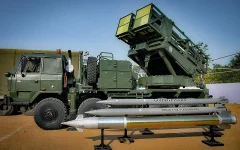
The Indian Air Force (IAF) is set to undergo a major transformation in its aerial combat capabilities with the planned acquisition of nearly 700 Astra Mk2 Beyond-Visual-Range Air-to-Air Missiles (BVRAAM).
Reports indicate that this new variant boasts an extended engagement range of approximately 200 kilometres. This is not just a routine purchase of ammunition; it represents a fundamental shift in the geometry and tempo of air warfare in South Asia.
By arming the formidable Su-30MKI fighter fleet with the Astra Mk2, the IAF will gain the ability to threaten enemy aircraft at distances where they can neither detect the launch nor retaliate effectively without external support.
This acquisition changes the risk calculus for adversaries, making the skies significantly more dangerous for hostile intruders.
Technical Evolution: From Mk1 to Mk2
The Astra Mk2 is a significant evolution of the indigenous Astra missile family.While the Astra Mk1 provided a credible head-on engagement range of roughly 100–110 kilometres, the Mk2 is reported to nearly double this reach to around 200 kilometres.
A key technical upgrade in the Astra Mk2 is the use of a dual-pulse solid rocket motor.
Unlike the single-pulse motor of the Mk1, which burns all its fuel in one go, a dual-pulse motor can save a portion of its fuel for the final phase of flight. This ensures the missile has enough energy left to maneuver and hit agile targets even at long ranges.
The missile’s performance is maximized when paired with the Su-30MKI’s powerful N011M "Bars" radar. This radar system can track targets at ranges exceeding 200 kilometres, allowing pilots to utilize the full reach of the Astra Mk2.
When supported by networked sensors, this combination allows the IAF to launch attacks from well outside the enemy's defensive bubble.
The "Bubble" Effect: A Geometric Advantage
The strategic impact of this range extension can be understood through simple geometry.The area of airspace that a single fighter jet can dominate increases drastically with the missile's range.
- Astra Mk1 (110 km): A single fighter can threaten an area of approximately 38,000 square kilometres.
- Astra Mk2 (200 km): The threatened area expands to roughly 125,600 square kilometres.
Practically, a small formation of Su-30MKIs equipped with these missiles can deny vast swathes of airspace to the enemy from a single patrol station.
This forces adversaries to keep their high-value assets—such as Airborne Warning and Control System (AWACS) aircraft and refuelling tankers—much further away from the frontline, reducing their effectiveness.
Regional Competition: Countering the PL-15
The introduction of the Astra Mk2 is a direct response to the proliferation of long-range missiles in the region, most notably China's PL-15, which is also reported to have a range exceeding 200 kilometres.- China (PL-15): A direct competitor to the Astra Mk2, featuring active radar guidance and long-range capabilities.
- Europe (Meteor): Operated by India (on Rafales) and some Western nations. The Meteor uses a ramjet engine, which "breathes" air to maintain speed throughout its flight. This gives it a larger "No Escape Zone" (the distance from which a target cannot run away) compared to conventional rocket-powered missiles like the Astra or PL-15.
- USA (AIM-120): The standard Western BVR missile. While effective, older variants generally have shorter kinematic ranges than the upcoming Astra Mk2.
Tactical Shifts: First Look, First Shot
The 200-kilometre reach allows for new tactical doctrines.- Stand-off Dominance: IAF pilots can launch missiles from safe zones, potentially outside the range of enemy ground-based air defence systems.
- Network-Centric Warfare: Long-range shots rely heavily on data. The missile needs mid-course updates to find its target. This makes India’s investment in AWACS and secure datalinks a "force multiplier," turning the missile into a precise instrument of denial.
- Pressure on Adversaries: Air forces in Pakistan and China will be forced to adapt. They may need to fly lower to hide from radar (which consumes more fuel and limits their own missile range) or invest heavily in electronic warfare to jam the Astra’s seeker.
Challenges and Realities
While the "200 km" figure is impressive, defence experts note important caveats. The maximum range is achieved only under ideal conditions—high altitude and head-on engagements.The "No Escape Zone" will be smaller than the maximum range. Additionally, the real-world lethality of the missile will depend on its Electronic Counter-Countermeasures (ECCM)—its ability to resist enemy jamming.
Conclusion
The procurement of ~700 Astra Mk2 missiles is a "force-multiplying" decision. It transforms the Su-30MKI from a platform that fights within the visual or near-BVR arena into a long-range deterrent capable of offensive dominance.While the battle for air superiority involves complex factors like networking and electronic warfare, the Astra Mk2 provides the IAF with the heavy punch needed to secure the South Asian skies.