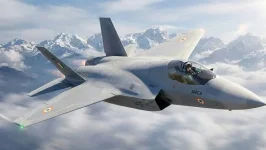
If Tata Advanced Systems Limited (TASL) is chosen to partner in the development and production of India’s Advanced Medium Combat Aircraft (AMCA), it could trigger a massive shift in the nation’s aerospace industry. This potential milestone is being compared to a "Lockheed Martin moment" for Indian manufacturing.
Following the unprecedented decision to exclude the state-run Hindustan Aeronautics Limited (HAL) from leading the prototype phase, TASL now stands as one of the three final private contenders, alongside Larsen & Toubro and Bharat Forge, vying to spearhead the AMCA project.
Winning this bid would elevate TASL far beyond the status of a basic parts supplier or manufacturing contractor. Instead, the company would step into the role of Prime Integrator for a cutting-edge fifth-generation stealth fighter.
This position mirrors the foundational role Lockheed Martin plays in the American F-35 programme, albeit on a different initial scale.
The Role of a Prime Integrator
In contemporary aerospace manufacturing, a Prime Integrator acts as the central conductor for a complex "system of systems."This demanding role requires the seamless combination of the aircraft's physical frame, engines, avionics, radar, electronic warfare capabilities, and mission software into one unified, combat-ready machine.
For industry giants like Lockheed Martin—which oversees the F-22 and F-35 programmes—this means taking charge of the overall design authority, leading systems integration, and managing the aircraft's maintenance throughout its lifespan.
Should TASL win the AMCA contract, it would lead a private consortium with the immense responsibility of constructing and testing the stealth fighter prototypes.
While the core intellectual property for the AMCA will remain with the Defence Research and Development Organisation (DRDO) and the Aeronautical Development Agency (ADA), TASL would govern the manufacturing techniques, assembly integration, and potentially secure long-term sustainment contracts to service the Indian Air Force fleet.
Ending the Single-Channel Monopoly
For decades, HAL has been the solitary force in India capable of assembling combat aircraft. This monopoly created a single-channel aerospace ecosystem, heavily reliant on state infrastructure.Awarding the AMCA Prime Integrator role to TASL would shatter this monopoly, fostering a parallel, private-sector aerospace ecosystem.
This shift mirrors the robust, competitive model seen in the United States, where companies like Lockheed Martin, Boeing, and Northrop Grumman operate independently as prime contractors.
Historically, introducing multiple integrators into the defence sector drives down costs, increases efficiency, and sparks rapid innovation.
A Leap from Components to Complex Integration
Building a fifth-generation stealth aircraft is less about simply bolting metal together and more about mastering digital integration.Modern fighters rely heavily on "sensor fusion," a network where radar, infrared tracking, electronic warfare systems, and data links communicate instantly.
The AMCA, envisioned as a 25-tonne twin-engine stealth platform, received formal clearance from the Cabinet Committee on Security in March 2024, backed by a monumental ₹15,000 crore budget for its prototype development phase.
TASL is not starting from zero. The company is already a trusted global supplier, manufacturing structural parts for Lockheed Martin’s C-130J transport planes and fuselage assemblies for Boeing’s Apache helicopters.
However, taking the helm of the AMCA programme would require a massive leap from manufacturing structural components to integrating highly sensitive, mission-critical combat subsystems.
The C-295 Facility as a Stepping Stone
TASL’s current management of India’s first private-sector final assembly line for military aircraft—the Airbus C-295 facility in Vadodara—serves as a vital training ground.Inaugurated jointly by Prime Minister Narendra Modi and Spanish Prime Minister Pedro Sanchez in October 2024, this facility has provided TASL with invaluable hands-on experience in complex assembly, supplier management, and stringent aerospace certification.
This "industrial muscle memory" is precisely what is needed to build a stealth fighter. Operating an AMCA production line will require flawless process control, the careful handling of specialised radar-absorbing stealth materials, and incredibly precise manufacturing workflows.
Navigating the "Valley of Death" and Future Horizons
A key aspect of Lockheed Martin’s success is its reliance on long-term maintenance and upgrade contracts, which often generate more revenue than the initial sale of the aircraft.If TASL secures the AMCA role, it stands to inherit the lifetime sustainment and modernisation cycles for the fleet, ensuring decades of stable industrial activity and revenue.
However, the path forward is steep. TASL will have to survive the notorious "Valley of Death"—the financially precarious gap between prototype development and full-rate production, which is currently projected to happen around 2035.
Maintaining a stable supply chain and retaining a highly skilled workforce over this decade-long transition will heavily test the company's resilience.
Furthermore, while Lockheed Martin typically originates its own aircraft designs, TASL will initially build a jet conceptualised by the ADA. To truly replicate the Lockheed model, the Indian private sector will eventually need to design and develop its own next-generation combat platforms from scratch.
Ultimately, if TASL is awarded the AMCA contract, it will be much more than a lucrative business deal. It will mark the definitive arrival of a private-sector aerospace giant in India, capable of leading sophisticated defence programmes and forever altering the landscape of the nation's military-industrial complex.