In a strategic move to fast-track the induction of indigenous fighter jets, the Indian Air Force (IAF) and the Ministry of Defence have agreed to provide Hindustan Aeronautics Limited (HAL) with specific waivers regarding their contractual agreements.
This decision is intended to ensure that the delivery of the Tejas Mk1A aircraft commences early in the upcoming financial year, addressing the critical shortage of fighter squadrons.
Prioritising Combat Readiness
While the IAF has permitted flexibility in secondary administrative and procedural requirements, it remains steadfast on the aircraft's primary warfighting capabilities.According to the revised understanding, HAL must satisfy three "non-negotiable" technical benchmarks before any aircraft is formally accepted:
- Weaponry Validation: Completion of all essential missile firing trials.
- Sensor Integration: Successful linking of the onboard radar with the Electronic Warfare (EW) suite.
- Armament Suite: Final certification of the complete weapons package.
While additional enhancements or less critical paperwork may be deferred by up to a year, the IAF will not compromise on the jet's ability to operate in contested airspace.
Current Progress and Milestones
As of February 2026, HAL reports significant progress in meeting these "must-have" requirements.Key updates include:
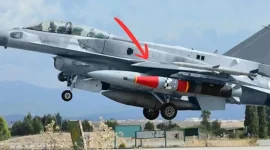
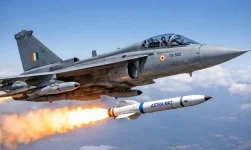
- Trial Success: Missile firing trials, including tests of the indigenous Astra Beyond Visual Range (BVR) missile and the ASRAAM close-combat missile, have been successfully conducted.
- Certification Status: The Centre for Military Airworthiness & Certification (CEMILAC) is currently processing the final clearances, which are expected to be finalised by April 2026.
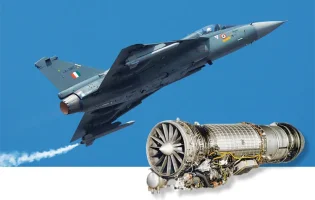
- Fleet Readiness: HAL has confirmed that five Tejas Mk1A jets are fully ready for delivery. An additional nine aircraft have been manufactured and flown but are currently awaiting the arrival of GE F404-IN20 engines from the United States to become fully operational.
Strategic Impact and Future Outlook
The Tejas Mk1A program, which includes orders for 180 aircraft, is a cornerstone of India's defence modernisation.This variant features advanced upgrades over the original Mk1, such as an Active Electronically Scanned Array (AESA) radar—with future batches set to receive the indigenous Uttam radar—and a sophisticated EW suite to counter modern threats.
The decision to grant contractual flexibility reflects a pragmatic shift to balance industrial realities with the urgent operational needs of the IAF, which currently operates at a reduced strength of 29 squadrons.
Once the April certification is achieved, the IAF will begin a short series of acceptance trials before officially inducting the first batch of Mk1A fighters into squadron service.