India is closing in on a massive agreement to acquire 400 Astra Mk-1 Beyond Visual Range (BVR) air-to-air missiles. This strategic move will vastly enhance the indigenous aerial strike power of the Indian Air Force (IAF).
Engineered by the Defence Research and Development Organisation (DRDO) and produced by state-run Bharat Dynamics Limited (BDL), the Astra Mk-1 is a cornerstone of the nation’s "Aatmanirbhar Bharat" (Self-Reliant India) initiative.
Procuring these domestic weapons substantially cuts down the military's dependence on foreign alternatives like the Russian R-77 and French MICA missiles.
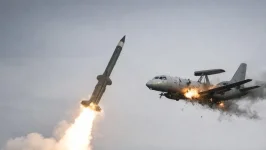
Boasting a maximum strike range of 110 kilometres in a head-on chase, the Astra Mk-1 is built to track and destroy hostile aircraft long before they come into visual sight.
The weapon travels at blistering speeds of up to Mach 4.5 and carries a 15-kilogram pre-fragmented high-explosive warhead, offering a lethal advantage in modern dogfights.
Currently, these sophisticated missiles are fully operational on the Su-30MKI fighter jets, a fleet of roughly 270 aircraft that serves as the frontline of India's air defence network. Engineers are also actively adapting the 154-kilogram weapon for compatibility with other combat platforms.
This impending 400-missile order expands upon previous acquisitions by both the IAF and the Indian Navy, which have already added more than 200 Astra Mk-1s to their arsenals.
The foundation for this mass induction was laid in May 2022 through a ₹2,971 crore ($383 million) contract that kicked off initial manufacturing.
Subsequent clearances in August 2024 broadened the weapon's deployment across various aircraft. As a result, the missile is now being seamlessly integrated into naval MiG-29K fighters and India's own Light Combat Aircraft (LCA) Tejas Mk-1 and Mk-1A fleets.
The entire Astra project serves as a showcase for India's self-sufficiency in aerospace defence, delivering capabilities that rival top-tier global BVR systems.
The missile features an advanced Ku-band active radar seeker and robust electronic counter-countermeasures (ECCM), allowing it to lock onto targets reliably even when enemy forces attempt to jam its signals.
Furthermore, its smokeless solid-fuel engine and fibre-optic gyroscope navigation allow for precise, stealthy strikes in heavily contested skies.
With the IAF continuously upgrading its combat readiness, adding hundreds of Astra Mk-1 missiles will standardize its long-range firepower with homegrown technology.
Relying on domestically built systems guarantees smoother maintenance, easier software upgrades, and lower lifecycle costs.
It also sets a strong foundation for the future of Indian air defence, paving the way for the upcoming Astra Mk-2, which features a dual-pulse rocket motor and a 160-kilometre range, as well as the advanced Astra Mk-3, which aims to hit targets up to 350 kilometres away using Solid Fuel Ducted Ramjet (SFDR) technology.