The Indian Air Force (IAF) has taken a decisive step towards enhancing its strategic reach and operational endurance by issuing a Request for Proposal (RFP) for six flight refuelling aircraft (FRA).
In a significant shift from previous procurement attempts, the IAF has specified that these six tankers will be converted from pre-owned commercial passenger jets, prioritising domestic industrial participation and cost-efficiency.
HAL and IAI Emerge as Frontrunners
According to defence sources, the partnership between Hindustan Aeronautics Limited (HAL) and Israel Aerospace Industries (IAI) is currently seen as the leading contender for this programme.The two aerospace giants have a well-established history of collaboration, reinforced by a Memorandum of Understanding (MoU) signed in 2022 specifically to convert civil passenger aircraft into Multi-Mission Tanker Transports (MMTT) in India.
IAI is a global leader in this niche domain, having successfully converted Boeing 767 aircraft for various international customers.
The proposed arrangement would see IAI providing the technical know-how and modification kits, while HAL would carry out the structural modifications and integration work at its Indian facilities.
This aligns perfectly with the RFP’s mandate for 30 per cent indigenous content under the ‘Make in India’ framework.
A Two-Track Procurement Strategy
The current RFP is the first phase of a larger requirement to induct approximately 12 new tankers. To balance immediate operational needs with long-term capability development, the IAF has adopted a split procurement strategy:- Phase 1 (Current): Acquisition of six converted aerial tankers based on commercial airframes.
- Phase 2 (Future): A separate tender for six brand-new refuellers, likely to attract Original Equipment Manufacturers (OEMs) such as Airbus and Boeing.
Setting up a local assembly line for such a limited number of aircraft would be economically unviable for these manufacturers, thereby tilting the competition in favour of the conversion model proposed by the HAL-IAI consortium.
Addressing Critical Capability Gaps
The urgency behind this procurement stems from the declining serviceability of the IAF’s existing fleet of six Ilyushin IL-78 MKI tankers. Inducted in 2003, these Russian-origin platforms have faced chronic maintenance issues, shortages of spares, and logistical bottlenecks, often resulting in low fleet availability.As the IAF expands its operational footprint with long-range maritime strikes and extended patrols in the northern sector, reliable aerial refuelling has become non-negotiable.
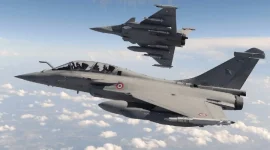
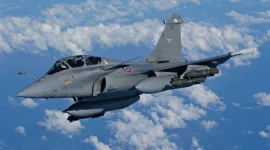
The new tankers will be essential force multipliers, extending the combat radius of key frontline assets including the Rafale, Su-30MKI, and the indigenous Tejas Mk1A.
Strategic Implications
The successful induction of these converted tankers will offer several strategic advantages:- Enhanced Reach: It will allow fighter squadrons to strike targets deeper within adversary territory and remain on station for longer periods.
- Operational Flexibility: A robust tanker fleet ensures that aircraft can be diverted or redeployed rapidly across different theatres without landing to refuel.
- Industrial Self-Reliance: The project will significantly boost India’s aerospace ecosystem, giving HAL critical experience in complex aircraft modifications and systems integration.