The Indian Air Force (IAF) is currently evaluating a dual-track strategy to modernise its Sukhoi Su-30MKI fleet, aiming to bridge potential capability gaps while awaiting formal government approval for its domestic "Super Sukhoi" initiative.
While the primary indigenous plan focuses on 84 aircraft, a parallel engagement with Russia is being considered to address the remaining 175 jets in the inventory.
Strategic Dual-Path Approach
The IAF is seeking to avoid a "capability valley" as regional security challenges intensify.While the Cabinet Committee on Security (CCS) reviews the proposal for the indigenous Super Sukhoi upgrade, the service is exploring a secondary route in collaboration with Moscow.
This dual-path strategy is designed to ensure that the backbone of India’s fighter strength does not face obsolescence during an extended ten-to-fifteen-year upgrade cycle.
Recent high-level engagements underscore this shift, with a Russian technical delegation visiting the Hindustan Aeronautics Limited (HAL) facility in Nashik. This facility has been the central hub for the Su-30MKI's license production for decades.
The potential Russian-assisted track is viewed as a way to expedite the modernization of the 175 aircraft currently not covered under the initial 84-unit domestic plan.
Technical Enhancements and Engine Offers
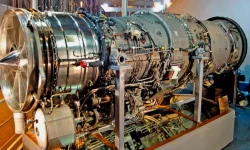
The Russian proposal emphasizes rapid upgrades to electronic warfare (EW) suites and radar capabilities. Notably, Moscow has offered the AL-41F1S engine—a powerplant derived from the Su-57 stealth fighter—to replace the existing AL-31FP engines.- Performance Gains: The AL-41 engine provides approximately 18% to 20% more thrust.
- Operational Impact: This would enhance high-altitude performance and potentially allow for "supercruise" capabilities, though the IAF is still weighing the long-term logistical costs of an engine swap versus maintaining the current units.
The Indigenous "Super Sukhoi" Blueprint
Under the leadership of HAL and the Defence Research and Development Organisation (DRDO), the domestic upgrade path remains a cornerstone of the Atmanirbhar Bharat mission.A primary feature of this track is the Virupaksha AESA radar, a sophisticated system based on Gallium Nitride (GaN) technology.
| Feature | Legacy N011M Bars (PESA) | Virupaksha AESA (Indigenous) |
|---|---|---|
| Technology | Passive Electronically Scanned | Active Electronically Scanned (GaN) |
| Detection Range | Baseline | 1.5x to 1.7x improvement |
| Tracking | Limited simultaneous targets | 64 to 100 targets simultaneously |
| Weight | Approx. 650 kg | Under 300 kg |
The indigenous package also integrates a suite of advanced domestic weaponry, including:
- BrahMos-ER: Supersonic cruise missiles for long-range precision strikes.
- Astra Series: Beyond-visual-range air-to-air missiles.
- Rudram: Anti-radiation missiles designed to neutralise enemy air defence systems.
Addressing the Squadron Shortfall
The urgency for these upgrades is driven by a critical shortage in fighter strength. As of early 2026, the IAF operates roughly 31 fighter squadrons, well below the sanctioned requirement of 42.With the Su-30MKI making up nearly 60% of the combat fleet, ensuring its readiness is vital for maintaining a credible deterrent in a two-front threat environment.
The proposed "tiered" modernization model may follow the precedent set by the MiG-21 Bison project, where some aircraft were upgraded abroad while the majority were handled domestically using technical kits.
This hybrid approach aims to balance indigenous technological growth with the immediate need for advanced air defence capabilities.