Retired Lieutenant General Raj Shukla, an experienced former Indian Army commander and noted military strategist, has strongly advocated for India to rapidly accumulate inexpensive, long-range strike drones similar to Iran's Shahed models.
Speaking in episode 398 of the ANI podcast with Smita Prakash, titled "Iran War: 10 Lessons India Must Learn Now," he underscored the necessity of preparing for the shifting dynamics of modern warfare.
He noted that recent global clashes, particularly those in the Middle East, have highlighted how large fleets of low-cost drones can drastically disrupt traditional military operations.
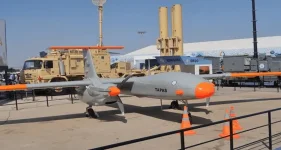
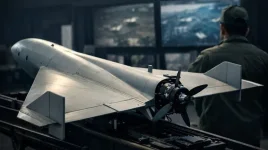
Platforms like the Iranian Shahed-136 have redefined asymmetric warfare by offering immense destructive power at a fraction of the cost of conventional weapons.
Priced at roughly $35,000, these kamikaze drones feature robust warheads, simple piston engines built from commercially available parts, and ranges that extend well over 1,000 kilometres.
This creates a severe financial burden for the defending force. Taking down a single inexpensive drone frequently demands multimillion-dollar interceptor missiles from sophisticated surface-to-air systems, making mass "swarm" attacks incredibly difficult and costly to stop.
Viewing this cost imbalance as an urgent warning, Lt Gen Shukla advised that India needs to integrate at least 100,000 such kamikaze drones into its offensive arsenal.
He estimated that rapidly manufacturing this massive drone fleet would cost around ₹33,000 crore, urging that this target be met by March 2027 to ensure strong deterrence.
Fortunately, domestic initiatives are already stepping up to this challenge.
For example, Bengaluru-based NewSpace Research and Technologies recently unveiled the "Sheshnaag-150," an AI-driven swarm drone with a 1,000-kilometre range and a 40-kilogram payload capacity.
Similarly, Noida-based IG Defence is advancing "Project KAL," another long-range loitering munition designed for deep-penetration strikes.
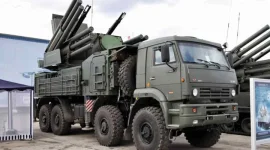
Alongside offensive drones, Shukla stressed the absolute necessity of building cost-effective interceptors to defend against similar swarm attacks.
If India lacks affordable, mass-produced defensive measures, enemy drone swarms could rapidly exhaust the nation's expensive air defence missiles. To address this exact vulnerability, Indian private firms are already innovating.
Nagpur-based Solar Group recently tested "Bhargavastra," a first-of-its-kind guided micro-missile system designed specifically to counter drone swarms by firing 64 missiles in a single salvo, offering a much cheaper alternative to traditional high-end missiles.
These strategic recommendations reflect a growing demand to modernise India's military approach for a multipolar era.
Lt Gen Shukla has consistently criticised the slow bureaucratic processes and the "L1 disease"—the heavy reliance on selecting the lowest bidder—that stifle national security innovation.
He has also pointed out that an allocation of just 1.98% of the GDP to defence is insufficient for a rapidly developing nation.
Instead, he envisions a highly integrated "drone-rocket force" that merges unmanned aerial systems with precision artillery, heavily incorporating artificial intelligence and autonomous technology.
The Indian private sector is already moving rapidly to turn this vision into reality.
Companies like Solar Industries have heavily invested in scaled manufacturing, recently inaugurating a dedicated drone-making facility in Maharashtra capable of producing 1,000 loitering munitions annually, with plans to invest ₹10,000 crore over the next decade. Their "Nagastra-1" suicide drones have already been delivered to the Indian Army.
With startups also pushing boundaries in GPS-independent navigation and AI, India clearly possesses the industrial foundation required to build this massive drone force, provided that government policies and military requirements are aligned without delay.