India is moving to significantly upgrade its multi-tiered air defence network by initiating the acquisition of Russian-manufactured Pantsir-S1 self-propelled air defence systems.
The Ministry of Defence is currently awaiting formal requirements proposal from the Indian Air Force (IAF) and the Indian Army for a total of 13 units, a move aimed at addressing critical vulnerabilities in the nation's airspace security.
Strategic Shield for High-Value Assets
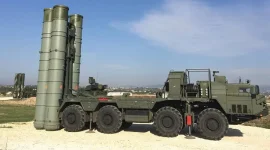
The primary objective of this procurement is to provide a "point defence" layer for India’s most sensitive military installations.Specifically, the Indian Air Force intends to deploy 10 of these systems to serve as a protective escort for its S-400 Triumf long-range missile batteries.
While the S-400 is capable of neutralizing high-altitude threats at distances up to 400 kilometres, it remains susceptible to low-flying "nuisance" threats.
The Pantsir-S1 acts as a dedicated guardian, utilizing its hybrid design of rapid-fire 30mm cannons and short-range missiles to intercept drones, loitering munitions, and cruise missiles that attempt to fly beneath the radar coverage of larger systems.
Versatile Deployment and Technical Prowess
The Indian Army is slated to receive the remaining three units, which will be stationed along sensitive border regions.These mobile platforms are essential for safeguarding forward military formations against tactical threats such as:
- Armed Unmanned Aerial Vehicles (UAVs)
- Precision-guided munitions
- Attack helicopters
- Short-range rockets
Its integrated radar can track up to 20 targets simultaneously, with a reaction time as low as 4 to 6 seconds.
This efficiency ensures that expensive S-400 interceptors are preserved for high-priority targets like enemy fighter jets, while the Pantsir handles smaller, saturated attacks.
Fast-Track Procurement and Domestic Growth
Given the immediate operational necessity highlighted by recent regional tensions, the Ministry of Defence is expected to utilize a fast-track acquisition route for the initial batch.This procedure bypasses traditional, lengthy tender processes to ensure the systems reach the field within months rather than years.
Following the initial import, the government plans to transition to a hybrid model where subsequent units are produced domestically.
This will involve collaborations with private-sector defence firms, aligning with the "Make in India" initiative to bolster local manufacturing and reduce long-term reliance on foreign suppliers.
Global Context and Future Outlook
The shift toward hybrid gun-missile systems reflects a global trend in modern warfare, where low-cost drones have increasingly threatened multi-million dollar defence assets.By integrating the Pantsir-S1, India joins several other nations in creating a "hard-kill" zone that provides 360-degree protection against asymmetric aerial threats.
This acquisition marks a pivotal step in completing India's Integrated Air Defence System (IADS), ensuring that every altitude—from the stratosphere to the immediate treetops—is monitored and defended.