In a significant leap for indigenous aerospace capabilities, India has outlined an ambitious roadmap to scale its upcoming aero-engine project.
The initiative aims to evolve a baseline 120kN (kilo-Newton) engine into a high-performance 140kN variant, specifically designed to power a future 35-ton sixth-generation stealth combat aircraft.
A Strategic Partnership for Self-Reliance
The project is rooted in a major joint venture established in late 2025 between India’s Gas Turbine Research Establishment (GTRE) and France’s Safran.Supported by an estimated $7 billion investment, the collaboration focuses on the "co-development" of engine technology rather than a simple purchase.
Unlike previous procurement models, this agreement includes a complete transfer of critical technology, such as single-crystal blade manufacturing and high-temperature materials.
The initial 120kN engine is slated for its first test flights by 2028, with full-scale serial production expected to commence around 2035.
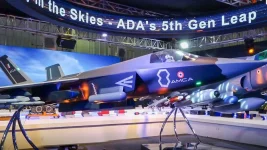
This engine will initially provide the "muscle" for the Advanced Medium Combat Aircraft (AMCA) Mk II and the Twin Engine Deck-Based Fighter (TEDBF) for the Indian Navy.
Engineering the 140kN Powerhouse
The transition from 120kN to 140kN represents more than a simple upgrade; it involves sophisticated modifications to the engine's core architecture.Engineers plan to maintain a compact frame—comparable in size to the American GE F414—while integrating several advanced features:
- Adaptive Cycle Technology: This allows the engine to switch between high-thrust modes for combat and high-efficiency modes for long-range cruising.
- Enhanced Airflow: Optimizing fan and compressor stages to process more air effectively.
- Advanced Materials: Utilizing heat-resistant ceramics and improved cooling systems to allow the turbine to operate at significantly higher temperatures.
- Improved Afterburners: Increasing "wet thrust" (power with afterburners engaged) without disproportionately increasing fuel consumption.
Powering the Sixth-Generation Vision
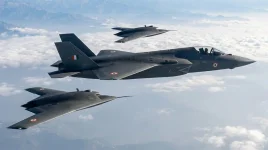
The requirement for a 140kN engine is driven by the specifications of a 35-ton sixth-generation fighter.This future platform is envisioned as a stealthy, potentially "tailless" aircraft featuring integrated Artificial Intelligence (AI), the ability to control drone swarms, and directed-energy weapons (such as lasers).
From a strategic defence perspective, such a high-thrust engine is essential for "supercruise"—the ability to fly at supersonic speeds without using fuel-heavy afterburners.
This capability is vital for penetrating sophisticated Anti-Access/Area-Denial (A2/AD) zones, allowing the aircraft to strike deep-seated command centres or logistics hubs from a distance and return safely to inland bases.
Economic and Technical Impact
While the 5-to-7-year development timeline is considered aggressive by international standards, the project holds the promise of "redemption" for India’s aero-engine sector following the challenges faced by the earlier Kaveri engine program.By retaining full Intellectual Property (IP) rights, India ensures that the technology can be adapted for various uses, including:
- Unmanned Systems: Powering heavy combat drones.
- Commercial Aviation: Developing derivatives for regional transport aircraft.
- Industrial Growth: Establishing domestic manufacturing hubs and high-tech employment.