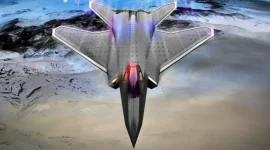
In a major strategic shift, India is positioning its Advanced Medium Combat Aircraft (AMCA) not only as a mainstay for the Indian Air Force (IAF) but also as a competitive contender in the international arms market.
Sources reveal that the industrial consortium chosen to lead the AMCA project will be granted formal authority to market the stealth fighter globally, provided it receives necessary export clearances.
This policy move aims to evolve the programme from a domestic procurement effort into a significant instrument of commercial and diplomatic influence.
Empowering Private Industry
Under this new framework, the selected consortium will be authorised to engage with foreign militaries, participate in international procurement competitions, and offer bespoke versions of the aircraft.This approach highlights a maturing strategy within India's defence manufacturing sector, where the goal is for home-grown platforms to achieve global success rather than relying solely on domestic orders.
Recent reports from early 2026 indicate that the Defence Research and Development Organisation (DRDO) has shortlisted three major private-sector contenders for the prototype phase:
- Tata Advanced Systems Ltd (TASL) as a standalone bidder.
- A consortium led by Larsen & Toubro (L&T) in partnership with Bharat Electronics Ltd (BEL).
- A group led by Bharat Forge, including BEML and Data Patterns.
Strategic Planning for Global Reach
Export permissions are expected to be secured before the aircraft enters low-rate initial production. This timeline is intended to allow the consortium to begin international negotiations and marketing campaigns early in the project’s lifecycle.While the IAF remains the primary customer, the industrial partners will have the autonomy to expand their production facilities to meet foreign demand without impacting the delivery schedule for the Indian military.
The government’s confidence in this model stems from the recent international performance of Indian defence hardware.
High-end systems like the Advanced Towed Artillery Gun System (ATAGS) and the WhAP 8×8 armoured vehicle have already gained traction abroad, proving that collaborative efforts between research agencies and private industry can produce export-ready technology.
Customisation and Scalability
To stay competitive, the AMCA will be offered with various customisation options, including specialised avionics, diverse weaponry suites, and mission systems tailored to a client nation's specific operational needs.Experts believe this flexibility is vital in a global market where air forces prefer platforms that integrate seamlessly with their existing logistics.
From a financial perspective, international sales are expected to:
- Lower unit costs for the Indian government through larger production volumes.
- Stabilise the supply chain for long-term sustainability.
- Strengthen strategic ties with partner nations through long-term maintenance and support agreements.
By granting marketing independence to the AMCA consortium, India is aligning its industrial capabilities with its broader ambition to become a leading global defence exporter.