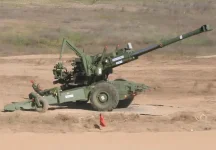
India’s domestic military manufacturing is approaching a significant achievement, with the Indian Army expecting the final delivery of its initial Dhanush artillery guns by the end of 2026.
The 2019 contract for 114 of these 155mm/45-calibre weapons is being fulfilled by Advanced Weapons and Equipment India Limited (AWEIL), a state-run entity formed from the corporatisation of the former Ordnance Factory Board.
The handover of the last 30 units will officially conclude the first major induction phase of this homegrown weaponry, marking a vital step in the nation's self-reliance initiatives.
While the manufacturing journey of the Dhanush initially encountered hurdles, including supply chain bottlenecks and quality assurance setbacks, these obstacles have been successfully overcome.
AWEIL has since stabilised its assembly lines and elevated its production standards to strictly align with the military's rigorous demands.
Today, the manufacturing process boasts an impressive 80% indigenous component rate, ensuring a steady and reliable output of these formidable field guns at a highly cost-effective rate of approximately ₹14 crore per unit.
The Dhanush initiative serves as a cornerstone in India’s comprehensive strategy to phase out older field weaponry. The system's blueprint traces its roots to the Swedish Bofors FH-77B, a 39-calibre gun famously utilised during the 1999 Kargil conflict.
However, Indian engineers have extensively upgraded the Dhanush into a 45-calibre platform. It now features an extended strike radius of up to 38 kilometres, alongside digital enhancements such as an inertial navigation system, GPS-based auto-laying, and superior all-terrain mobility through an auxiliary power unit.
Currently, the Indian Army has successfully integrated the Dhanush into its active combat formations, with four artillery regiments already deploying the system.
Once the remaining units from the initial 114-gun order are handed over, the military anticipates establishing two more regiments before the year concludes.
These upcoming units will benefit from the latest production iterations, capitalising on all the mechanical and electronic refinements made throughout the manufacturing cycle.
Looking ahead, the military's strategic roadmap involves a massive expansion of this indigenous firepower.
Defence authorities are laying the groundwork to acquire roughly 300 more Dhanush systems in the near future, a move that would equip up to 15 additional artillery regiments.
This large-scale procurement is essential to replace the dwindling stockpile of 1980s-era Bofors guns. Out of the original 400 Bofors imported, less than half remain fit for service today due to age and parts cannibalisation.
By heavily investing in the Dhanush, the Army guarantees that its troops maintain overwhelming and precise artillery support across India's varied operational theatres, particularly in the challenging high-altitude border regions.