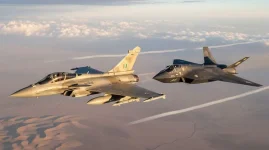
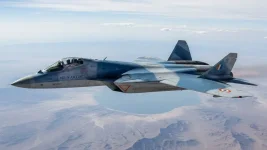
The nation’s strategic push to develop a fifth-generation fighter jet has reached a pivotal industrial milestone, with the Aeronautical Development Agency (ADA) set to release a formal Request for Proposal (RFP) for the Advanced Medium Combat Aircraft (AMCA) programme.
According to recent industry disclosures, the competition for the prime development contract has consolidated around three distinct private sector formations: a consortium led by Larsen & Toubro (L&T) in partnership with Bharat Electronics Limited (BEL) and Dynamatic Technologies; a standalone bid by Tata Advanced Systems Limited (TASL); and a third alliance between Bharat Forge Ltd, BEML Limited, and Data Patterns (India) Limited.
While this tender represents the most significant indigenous aerospace undertaking to date—valued at approximately ₹15,000 crore for the prototype phase—officials indicate that the industrial outcome will not be a simple "winner-takes-all" scenario.
Although the narrative has largely focused on the high-stakes race to become the primary private sector integrator, sources within the Ministry of Defence (MoD) suggest the programme’s structure is far more nuanced.
Planners familiar with the AMCA framework emphasise that the project is designed to construct a multi-tiered industrial ecosystem rather than simply awarding a monopoly to a single corporate entity.
The primary goal of the current selection process is to identify a Tier-I development and production partner to act as the lead systems integrator. However, the architecture of the programme explicitly preserves substantial roles for other capable firms at the Tier-II and Tier-III levels.
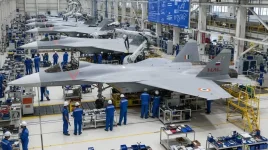
This layered approach is necessitated by the extreme technical complexity of fifth-generation fighter engineering, which is not a linear manufacturing task but a distributed enterprise.
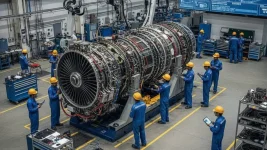
The AMCA requires expertise spanning advanced stealth composites, avionics fusion, mission computing, and precision airframe fabrication. No single company is expected to possess in-house capabilities for every domain.
Consequently, the programme anticipates a collaborative supply chain where specialized firms deliver critical subsystems and high-precision assemblies.
Industry analysts note that firms missing out on the Tier-I "Prime" status are likely to re-enter the ecosystem as strategic suppliers.
If a consortium led by one major player wins the lead contract, they will almost certainly need to leverage the specialised tooling and facilities of their competitors to meet production timelines.
This dynamic effectively transforms the competition from a binary elimination event into a broader exercise in national capability mapping.
Historical precedents from earlier indigenous projects, such as the Tejas Light Combat Aircraft (LCA), have demonstrated that aerospace maturity relies on distributed participation.
Complex platforms are aggregations of thousands of precision components sourced from a diverse vendor network. The strength of this network—ranging from niche machining shops to major avionics houses—ultimately defines the resilience of the national defence industrial base.
The AMCA strategy appears to be a deliberate application of these lessons.
By formally encouraging Tier-II and Tier-III participation, defence planners are seeding a long-term industrial pipeline capable of supporting an expanding aerospace portfolio.
Companies that do not secure the lead integrator role will not be sidelined; instead, their capital investments and technical expertise will be absorbed into the wider production chain to ensure redundancy and surge capacity.
This philosophy reflects a strategic shift in how India structures complex defence programmes.
Rather than concentrating all capabilities within a single entity, the focus is on creating a scalable manufacturing network similar to global aerospace models, where Tier-I integrators rely on a dense ecosystem of suppliers.
For the wider industry, the implication is clear: the RFP is not just about selecting a winner, but about integrating the entire sector into a supply chain that will support the AMCA through decades of upgrades and future variants.