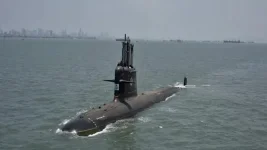
India is making decisive strides in strengthening its nuclear triad with the progression of the S-5 class ballistic missile submarine (SSBN) programme. This initiative marks a monumental leap in the nation's underwater strategic capabilities.
According to recent reports, construction on these next-generation vessels commenced in late 2025, establishing the S-5 class as the future backbone of India’s credible second-strike capability.
A Quantum Leap in Tonnage and Stealth
The specifications of the S-5 class represent a dramatic departure from India's previous generation of SSBNs.With a submerged displacement of approximately 13,500 tons, these new vessels are nearly twice the size of the earlier Arihant-class boats.
This substantial increase in volume is not merely for size’s sake; it facilitates critical operational advantages.
The larger hull accommodates a more potent nuclear propulsion system and advanced stealth technologies, significantly reducing acoustic signatures.
Furthermore, the enhanced endurance capabilities will allow the S-5 submarines to conduct extended patrols deep into the oceans, far beyond the limitations of their predecessors.
The "Teeth" of the S-5: 12 MIRV-Capable Missiles
The most defining feature of the S-5 programme is its formidable firepower.Confirmed reports indicate that each submarine will be armed with 12 submarine-launched ballistic missiles (SLBMs), specifically from the advanced K-5 or K-6 series.
These missiles are classified as intercontinental ballistic missiles (ICBMs) and are equipped with Multiple Independently Targetable Reentry Vehicles (MIRV) technology.
MIRV capability allows a single missile to carry multiple warheads that can be directed at different targets simultaneously.
This technology drastically amplifies the submarine's strike potential, enabling precise and robust retaliation against multiple high-value targets.
By deploying such sophisticated weaponry, India aims to project power and deter potential adversaries over vast strategic distances.
Closing the Gap: Parity with Regional Powers
The design philosophy of the S-5 class draws a direct parallel with established global standards, most notably China’s Type 094 Jin-class submarines.Both the S-5 and the Jin-class operate within a similar displacement range of 13,000 to 14,000 tons and share the distinct configuration of carrying 12 SLBMs (the Jin-class carries the JL-2 missile).
This parity is significant. It highlights India’s maturing technological prowess in the domain of underwater warfare and signals a closing of the gap in regional sea-based deterrence.
While larger vessels like the American Ohio-class or Russian Borei-class carry heavier payloads, the S-5’s specific combination of tonnage and 12-missile capacity places it firmly in the same strategic category as its Chinese counterpart.
Indigenous Reliance and Future Outlook
The ongoing construction of the S-5 fleet, which has been active since late 2025, serves as a testament to India’s "Atmanirbhar Bharat" initiative in defence manufacturing.The programme relies heavily on indigenous innovations, from the nuclear reactors powering the vessels to the complex missile systems they carry.
As these submarines enter service in the coming years, they will ensure a continuous and survivable presence at sea.
By solidifying the underwater leg of the nuclear triad—complementing land-based missiles and air-delivered weapons—the S-5 programme promises to provide unmatched survivability and strategic reach, securing India's defence posture for decades to come.