Russian military analysts believe that India’s anticipated move to secure a second contract for the S-400 air defence system is heavily influenced by tactical observations from recent Middle Eastern conflicts.
Igor Korotchenko, a prominent Russian military expert and Director of the Moscow-based Center for Analysis of World Arms Trade (CAWAT), suggests that New Delhi is closely evaluating how American-made air and missile defence platforms, such as the Patriot and THAAD, have fared in active combat situations.
According to Korotchenko, these U.S.-origin systems allegedly struggled to provide a fully impenetrable shield for critical military and civilian infrastructure during recent hostilities in the Persian Gulf.
He asserts that these vulnerabilities are reshaping the procurement strategies of international buyers, including India.
It must be noted, however, that these remarks align with a specific geopolitical perspective; the actual combat effectiveness of complex air defence networks is highly situational, and comprehensive performance data is rarely available for independent public verification.
This strategic narrative coincides with massive procurement milestones in New Delhi.
On March 27, 2026, India’s Defence Acquisition Council (DAC), chaired by Defence Minister Rajnath Singh, reportedly approved a sweeping military modernisation package valued at approximately $25.14 billion (Rs 2.38 trillion).
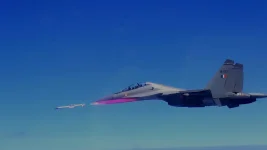
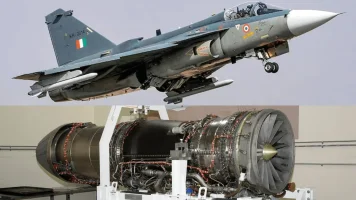
Alongside clearance for an additional batch of S-400 systems, this monumental approval includes Medium Transport Aircraft intended to replace the Indian Air Force's ageing AN-32 and IL-76 fleets, remotely piloted strike aircraft, and comprehensive overhauls for Su-30MKI engines.
Securing a second S-400 contract would drastically expand the protective umbrella of India’s integrated, multi-tiered air defence network.
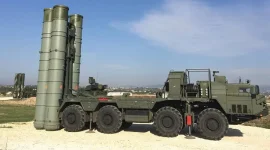
The Russian-built S-400 Triumf is engineered to detect and neutralise a vast array of airborne targets—spanning fighter aircraft, cruise missiles, and specific classes of ballistic missiles—across extensive ranges.
Its critical value to India’s national security was distinctly demonstrated during the events of Operation Sindoor in May 2025.
Following India's targeted, non-escalatory strikes against terror infrastructure across the Line of Control in response to the Pahalgam terror attack, Pakistan launched a wave of retaliatory drone and missile strikes against Indian military installations.
India’s multi-layered air defence architecture, reinforced by advanced surface-to-air platforms, effectively neutralised these incoming threats, validating the necessity of high-end interception capabilities.
Currently, India’s military calculus is driven by the urgent need to mitigate a diverse and rapidly changing array of airborne dangers.
These range from traditional tactical ballistic missiles to the highly asymmetric menace posed by low-cost drone swarms and loitering munitions.
Consequently, Indian defence planners are prioritising a comprehensive, overlapping shield capable of destroying both sophisticated, high-speed weapons and cheaper, low-flying unmanned systems.
To achieve this absolute protection, Korotchenko advises that India could seamlessly pair its long-range S-400 batteries with shorter-range point defence systems, such as the Russian Pantsir-S1M.
These point-defence units are explicitly designed to guard high-value assets—like the S-400 radars and launchers themselves—against overwhelming saturation strikes by drones and precision-guided bombs.
Implementing such a combination ensures the operational survival and continuous functionality of the broader air defence network in an intense, modern combat environment.