The Ministry of Defence (MoD) is optimistic that the landmark agreement between Hindustan Aeronautics Limited (HAL) and US-based GE Aerospace for the domestic production of F414 jet engines will be sealed by the end of March 2026.
Senior officials have indicated that the groundwork is largely complete, with both entities having signed a Memorandum of Understanding (MoU) and concluded extensive high-level discussions to define the scope of the partnership.
Deep Technology Transfer: A Core Requirement
The Government of India has maintained a firm stance that this manufacturing programme must transcend simple assembly.The MoD has clearly communicated to Washington that a minimum of 80 per cent Transfer of Technology (ToT) is a non-negotiable prerequisite for the deal.
Unlike previous agreements that often relied on "screwdriver technology"—where pre-made kits are merely assembled locally—this pact aims to bring critical metallurgical and engineering know-how to India.
This includes advanced processes such as the coating of hot-section components and precision machining, which are vital for establishing a true aero-engine ecosystem in the country.
Contingency Plans in Place
While the MoD is keen to finalise the agreement, officials have stated that the 80 per cent ToT threshold is the bedrock of the long-term production plan.Should the final treaty fail to meet this mandate, the ministry has prepared a contingency strategy.
The Tejas Mk2 development programme would initially proceed using the limited stock of 8 to 12 F414 engines already delivered to HAL for prototype testing and flight trials.
Following this, the government would evaluate whether to procure the F414 through a different mechanism or to pivot towards alternative propulsion solutions for mass production.
Powering the Future Fleet
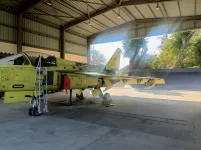
The F414-INS6 engine is the designated powerplant for the Tejas Mk2, a 4.5-generation fighter that significantly outperforms the current Tejas Mk1A.Generating approximately 98 kN of thrust compared to the 84 kN class F404 engines used in the Mk1A, the F414 is essential for supporting the Mk2’s heavier payload, extended range, and advanced avionics suite.
Securing indigenous manufacturing capability for this engine is viewed as a strategic necessity, ensuring cost-effective sustainment and reducing vulnerability to global supply chain disruptions.
The Road to Indigenisation
Looking beyond the immediate horizon, the MoD envisions the Tejas Mk2 as a stepping stone toward complete self-reliance.The aircraft is being considered as a future testbed for India’s indigenous 120 kN-class engine, currently under development for the Advanced Medium Combat Aircraft (AMCA).
The long-term roadmap suggests that while the AMCA will initially utilise imported engines, it will eventually transition to this domestic powerplant around 2035.
Once the indigenous 120 kN engine achieves certification and production maturity, it could potentially replace the F414 in the Tejas Mk2 fleet as well.
However, officials caution that developing a new-generation fighter engine is a decade-long endeavour fraught with technical complexities.
Consequently, the immediate priority remains the successful conclusion of the HAL–GE agreement.
If signed this March, the deal will serve as a foundational pillar for India’s aerospace defence capabilities for the next twenty years.