The Indian Ministry of Defence (MoD) is taking a decisive step to boost the combat readiness of the Indian Air Force (IAF) by upgrading its fleet of MiG-29UPG fighter jets.
On March 25, the MoD released a Request for Proposal (RFP) to arm these aircraft with the Advanced Short Range Air-to-Air Missile (ASRAAM), a move designed to drastically improve the jets' dominance in close-quarters aerial combat.
A Comprehensive Fleet Upgrade
The newly issued RFP outlines a complete integration programme rather than a simple weapon purchase. The contract covers the exhaustive testing and fitting of the ASRAAM onto the MiG-29UPG platform.Furthermore, it mandates the supply of new missile launchers, updated cockpit avionics, ground support machinery, and thorough training programmes to ensure both pilots and maintenance crews are fully proficient with the new system.
The IAF currently operates a fleet of over 55 MiG-29 aircraft, which includes eight twin-seat training variants. All of these fighters are scheduled to undergo this modernisation process.
Standardising the Arsenal
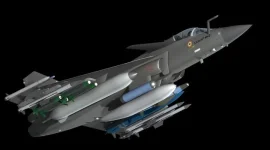
Manufactured by the European aerospace consortium MBDA, the ASRAAM is already a proven asset within the IAF. It is currently actively deployed on India's indigenous LCA Tejas and the Jaguar strike aircraft.Integrating this weapon onto the Russian-origin MiG-29 aligns seamlessly with the IAF's broader "New Generation Close Combat Missile" strategy, which aims to standardise short-range weaponry across various fighter platforms to simplify logistics and training.
Once fully integrated, the ASRAAM will progressively phase out the legacy Russian R-73 missile (known by its NATO reporting name, AA-11 Archer).
While the R-73 was considered a revolutionary weapon when designed in the 1980s, its effective range is limited to roughly 10 to 15 kilometres.
In stark contrast, the ASRAAM boasts an engagement range exceeding 25 kilometres, effectively doubling the reach of Indian pilots in a dogfight.
Next-Generation Technology
From a technical perspective, the ASRAAM represents a massive leap over the older Soviet-era systems.It is a fourth-generation weapon equipped with a highly sensitive Imaging Infrared (IIR) seeker, making it exceptionally resistant to enemy countermeasures like flares.
A defining feature of the missile is its extreme "high off-boresight" capability. This allows an IAF pilot to lock onto and destroy an enemy aircraft that is flying at a sharp angle to the side—or even over the shoulder—without having to point the nose of the MiG-29 directly at the target.
Flying at speeds surpassing Mach 3, the ASRAAM operates on a "fire-and-forget" principle. Once launched, the missile guides itself, allowing the pilot to immediately perform evasive manoeuvres or engage other threats.
Maintaining the Strategic Edge
The MiG-29 remains a cornerstone of India’s frontline air defence architecture, a fact underscored by its recent active deployment during Operation Sindoor in 2025.As regional adversaries continue to field heavily upgraded fighter jets with advanced, extended-range guided weapons, upgrading the MiG-29 is a tactical necessity.
By replacing ageing Soviet-era missiles with state-of-the-art Western technology, the MoD is ensuring that the veteran MiG-29 fleet remains a lethal and highly relevant force in modern within-visual-range (WVR) combat scenarios.