Facing critical airframe fatigue across its fleet and stringent operational restrictions from Washington, the Pakistan Air Force (PAF) has initiated advanced technical negotiations with Turkish Aerospace Industries (TAI).
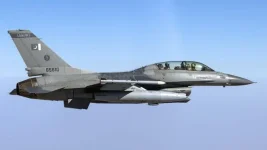
The proposed partnership aims to secure a comprehensive survival package for Pakistan’s ageing F-16 ‘Viper’ fleet, a move necessitated by the refusal of the United States to authorise offensive upgrades.
While the US State Department recently approved a $686 million sustainment package in December 2025 to support the PAF’s F-16 fleet, open-source defence analysts note that this deal is strictly limited to flight safety, engine spares, and communication interoperability.
It notably excludes the deep structural enhancements and modern weaponry required to keep the jets combat-viable against peer adversaries. Consequently, Pakistan has looked to Ankara for a more robust solution.
Structural Crisis and the Turkish Rescue
Sources close to the negotiations have confirmed that a high-level PAF delegation visited TAI’s facilities in Kazan, Turkey, in October 2025. Their objective was to finalise a Service Life Extension Programme (SLEP) for the PAF’s oldest airframes.The core of the crisis lies with the PAF’s Block-15 F-16A/B fleet. Delivered between 1983 and 1987, these 55–60 aircraft are now approaching 40 years of service. With flight hours accumulating between 7,500 and 8,000, these airframes face mandatory retirement by 2030 without significant intervention.
TAI has proposed a structural renovation package mirrored on its indigenous "Özgür" modernisation project, which successfully extended the life of the Turkish Air Force’s own F-16 Block-30 fleet from 8,000 to 12,000 flight hours.
The proposed work for Pakistan would involve replacing critical load-bearing components, including wing carry-through bulkheads, longerons, and landing-gear trunnions.
To expedite the process and transfer technical know-how, the refurbishment is planned to take place at Pakistan’s dedicated F-16 overhaul facility at Kamra, utilising Turkish structural kits.
Bypassing Restrictions: The UBAS Solution
Perhaps the most significant aspect of the proposed deal is the integration of the Universal Battlefield Armament System (UBAS).Developed by TAI in collaboration with Aselsan, this system offers a workaround to the restrictive "source code" controls enforced by the aircraft's original manufacturer, Lockheed Martin.
The UBAS is described as an aircraft-independent firing control interface—effectively a "tablet-based" system that bypasses the F-16’s locked mission computers.
By communicating directly with the weapon stations via an open-architecture databus, it allows the integration of non-US munitions without requiring American permission.
This system would enable the PAF to arm its F-16s with Turkey’s next-generation air-to-air missiles:
- GÖKDOĞAN: An active radar-guided Beyond Visual Range (BVR) missile, offering a range exceeding 100km, comparable to the American AIM-120 AMRAAM.
- BOZDOĞAN: An imaging-infrared short-range missile, offering high off-boresight capability similar to the AIM-9X.
- Precision Bombs: GPS and laser-guided kits (HGK and Teber) similar to American JDAMs.
Operational Urgency Following ‘Sindoor’ Losses
The urgency for this upgrade is driven by the PAF’s dwindling combat effectiveness, which was starkly highlighted during the "Operation Sindoor" hostilities in May 2025.During the conflict, the limitations of the older Block-15 jets—armed with obsolete AIM-9L/M Sidewinders—were exposed against modern air defences.
Indian Air Chief Marshal A.P. Singh previously confirmed that Indian S-400 systems engaged PAF F-16s at extreme ranges, reportedly downing at least two aircraft.
Furthermore, precision strikes by the Indian Air Force (IAF) on forward bases like Mushaf and Rafiqui reportedly destroyed additional aircraft on the ground.
With the Chinese J-10CE now assuming the primary air-superiority role for Pakistan, the F-16 fleet has been relegated to secondary duties.
However, if the Turkish deal is finalised—with officials stating agreements are "95% complete"—Pakistan aims to field up to 45 revitalised, Turkish-armed F-16s by 2029.
This interim solution is intended to maintain squadron numbers until the indigenous Project AZM fifth-generation fighter programme reaches maturity in the mid-2030s.