- Views: 40
- Replies: 1
Following the decisive performance of the Medium-Range Surface-to-Air Missile (MR-SAM) system during the recent Operation Sindoor, India and Israel have moved to fast-track a comprehensive enhancement package for the weapon platform.
Sources confirm that officials from Israel Aerospace Industries (IAI) and the Defence Research and Development Organisation (DRDO) are now in advanced talks to implement the next generation of capabilities for the system, also known as Barak-8.
The MR-SAM system, which played a pivotal role in neutralising aerial threats during the May 2025 operation, has proven its reliability in a combat environment.
This success has prompted defence planners to accelerate modernisation efforts to ensure the system remains effective against evolving dangers.
Focus on Advanced Sensors and Detection
While official technical specifications remain classified, defence sources indicate that the upgrades will prioritise sensor modernisation and the integration of more powerful radar systems.The primary goal is to significantly expand the MR-SAM’s detection envelope and improve its ability to discriminate between targets in cluttered airspace.
A key objective of this collaboration is to sharpen the system's response times against high-speed, low-radar cross-section (RCS) threats. This includes bolstering defences against next-generation supersonic cruise missiles and increasingly sophisticated unmanned aerial systems (UAS).
These enhancements are expected to leverage recent advancements in software and signal processing to handle saturation attacks more effectively.
Integration with Project Kusha and Sudarshan Chakra
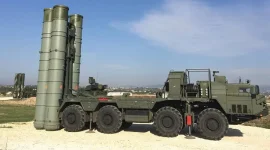
A critical aspect of the upgrade is the seamless integration of MR-SAM batteries into India’s emerging multi-layered air defence architecture, specifically under the ambit of 'Project Kusha' and the 'Mission Sudarshan Chakra' initiative.Project Kusha, India’s indigenous long-range air defence programme, aims to operationalise a formidable shield comparable to the Russian S-400. The upgrade will allow MR-SAM units to operate interoperably with this larger grid.
By receiving targeting data from the high-powered long-range radars of the national air defence network, MR-SAM units will be able to launch interceptors based on external data inputs.
This network-centric approach—often referred to as Cooperative Engagement Capability (CEC)—enables missile batteries to engage hostile targets well beyond the range of their own organic radars.
This capability is essential for closing coverage gaps and ensuring overlapping protection for strategic assets and mobile military formations.
Future-Ready Air Defence
The collaboration between DRDO and IAI will also introduce robust software updates designed to refine multi-target engagement algorithms.These improvements are vital for protecting airbases and critical infrastructure from simultaneous attacks by multiple projectiles.
With these planned upgrades, the MR-SAM is set to evolve from a standalone defensive asset into a fully networked node within India’s Integrated Air Defence Command and Control System (IACCS).
As India continues to strengthen its aerial shield, the IAI-DRDO partnership remains a cornerstone of the nation’s strategy to safeguard its airspace against future supersonic threats.