India and Russia have formally commenced diplomatic and technical consultations regarding the acquisition and domestic manufacturing of the R-37M very long-range air-to-air missile (VLR AAM) for the Indian Air Force (IAF).
These discussions mark a significant step towards bolstering the long-range interception capabilities of the IAF's frontline Su-30MKI fleet.
According to defence sources, Moscow has proposed a comprehensive package that includes the immediate off-the-shelf supply of the missiles, followed by a potential technology transfer agreement to facilitate production within India.
A 'Super-Heavy' Payload for Air Dominance
The R-37M, known by its NATO reporting name AA-13 'Axehead', is a heavy-class weapon system designed to destroy high-value aerial targets such as Airborne Warning and Control Systems (AWACS), mid-air refuellers, and electronic warfare aircraft at ranges exceeding 200 km.In a significant technical proposal, Russian officials have confirmed that the Su-30MKI airframe can be adapted to carry a formidable payload of at least eight R-37 missiles simultaneously.
This configuration would transform the Su-30MKI into a potent area-denial platform, capable of threatening enemy support aircraft deep within hostile airspace while remaining safely beyond the reach of most return fire.
Procurement Strategy: Immediate Buy and Future Build
The IAF is reportedly looking to secure an initial batch of approximately 300 R-37 missiles through a direct purchase route. This strategy aims to rapidly equip operational Su-30MKI squadrons with a proven 'AWACS killer' capability, plugging a vital gap in very long-range combat readiness.While the initial focus is on swift induction, sources indicate that local manufacturing remains a key part of the negotiation.
A decision on establishing a production line in India will likely depend on the missile's operational performance, the cost-effectiveness of the deal, and the extent of technology transfer Russia is willing to authorize.
Parallel Path with Indigenous Astra Mk2
This potential acquisition coincides with the Indian Ministry of Defence granting the Acceptance of Necessity (AoN) for the indigenous Astra Mk2 Beyond Visual Range Air-to-Air Missile (BVRAAM).Like the R-37, the Astra Mk2 is being developed to engage targets at ranges of around 160–200 km, utilizing a dual-pulse rocket motor for enhanced energy management.
However, the two programs are viewed as complementary rather than competitive. Current plans suggest the Astra Mk2 will see a massive production run of 600–700 units, becoming the standard long-range weapon for the fleet, while the heavier R-37 will serve as a specialized, high-speed interceptor for specific strategic missions.
A Layered Air Defence Doctrine
From a strategic standpoint, the simultaneous pursuit of the Russian R-37 and the Indian Astra Mk2 reveals a 'layered' approach to air power modernization.The Astra Mk2 program underscores India's commitment to long-term self-reliance and scalable indigenous solutions. In contrast, the R-37 offers a mature, hypersonic solution—capable of speeds up to Mach 6—that can be deployed immediately to deter adversaries from operating force multipliers near Indian borders.
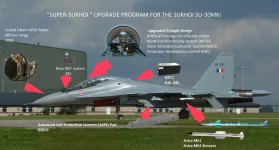
If the deal is finalized, the integration of the R-37 will significantly elevate the Su-30MKI’s status as an air dominance fighter. When paired with planned upgrades to its radar and avionics, the aircraft will possess the ability to detect and neutralize threats at unprecedented distances.
Meanwhile, continued support for the Astra Mk2 ensures that India’s domestic missile ecosystem continues to mature, reducing reliance on foreign imports while guaranteeing credible combat power for the future.