The Su-57 programme has achieved a significant breakthrough with the successful maiden flight of the T-50/2 prototype powered by the new Izdeliye 177 turbofan engine on its left-hand nacelle.
This development marks a critical step in the evolution of Russia’s fifth-generation fighter, directly countering long-standing criticism regarding the lack of flight validation for its updated propulsion systems.
The milestone comes precisely as Moscow accelerates its efforts to market the aircraft to key strategic partners, most notably the Indian Air Force.
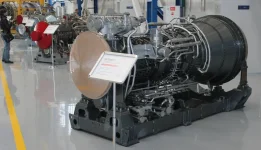
Previously displayed at Aero India 2025 in Bengaluru, the 177-series engine—marketed for export as the 177S—has attracted considerable attention as a bridge between the legacy AL-41 family and the future AL-51 (Izdeliye 30) powerplant.
Until this flight, industry observers had frequently critiqued the 177-series for being limited to static exhibitions and ground-based test rigs.
By successfully integrating and flying the engine on the Su-57 platform, Russian engineers have demonstrated its basic airworthiness and operational viability, effectively mitigating concerns about its developmental maturity.
Currently, the export variant of the Su-57 is generally offered with an upgraded derivative of the AL-41 engine.
While reliable, this older powerplant does not meet the stringent thrust-to-weight and supercruise benchmarks required for genuine fifth-generation performance.
The potential availability of the Izdeliye 177 changes this dynamic significantly.
For discerning customers like India, who prioritise high thrust, modular growth, and clear upgrade paths, the 177 engine offers a more compelling proposition than the baseline propulsion options.
Designed specifically to enhance the capabilities of the Su-57, the new engine promises superior thrust and improved overall flight characteristics.
Russian officials continue to assert that the Su-57 is the only fifth-generation fighter with proven combat experience, highlighting its operational deployments in Syria and the ongoing conflict in Ukraine as evidence of its battlefield effectiveness.
Despite this technical success, the terms of any potential offer to New Delhi remain ambiguous.
It is not yet clear if Russia intends to include the 177 engine in a standard export contract or if access to this advanced propulsion technology will be linked to broader industrial cooperation.
Defence analysts suggest that acquiring such sensitive technology might require India to commit to a co-development or co-production framework, particularly if the Indian Air Force is considering future twin-engine iterations or heavily customised variants of the Su-57.
The successful flight test serves as a firm declaration that the Izdeliye 177 is moving from the prototype phase toward mass production.
The United Engine Corporation (UEC) has confirmed that the engine is undergoing final trials in preparation for series manufacture.
Once fully certified, the engine is expected to support not only the Su-57 fleet but also the prospective Su-75 'Checkmate' light tactical fighter programme.