India’s quest for indigenous aero-engine sovereignty has taken a definitive leap forward following the conclusion of advanced talks between the Defence Research and Development Organisation’s (DRDO) Gas Turbine Research Establishment (GTRE) and French aerospace major Safran.
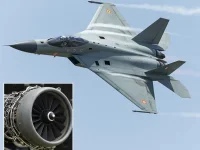
According to sources privy to the discussions, the two entities have finalized a roadmap to co-develop a "clean-sheet" next-generation engine for the Advanced Medium Combat Aircraft (AMCA) Mk2.
This new propulsion system will be a hybrid technological marvel, merging the reliability of proven French platforms with futuristic sixth-generation advancements, all while adhering to strict dimensional constraints for seamless integration.
The ‘Retrofit’ Strategy: Matching the F414 Footprint
A critical design requirement mandated by the Indian Air Force (IAF) and GTRE was physical compatibility with the General Electric F414 engine. The AMCA Mk1 variant is currently designed around the American F414-INS6 powerplant.To ensure a smooth transition to the more advanced Mk2 variant without necessitating major structural redesigns, Safran has agreed to engineer the new high-thrust engine to fit within the exact dimensional envelope of the F414.
This "easy retrofit" capability ensures that as the indigenous engine matures, it can be swapped into the AMCA airframe with minimal modifications, saving both time and development costs while streamlining logistics for the IAF.
Blending M88 T-REX and 6th-Gen Core Technology
The proposed engine is described as a "true fifth-generation" powerplant that bridges the gap to the sixth generation.It will leverage technology from two primary sources:
- The M88 T-REX Programme: An advanced evolution of the M88 engine that powers the Rafale, known for its robustness and rapid throttle response.
- FCAS/NGF Technology: Cutting-edge core developments from Europe’s Future Combat Air System (FCAS) and New Generation Fighter (NGF) programmes.
Mastering Extreme Temperatures
Central to the new engine's performance is the use of advanced metallurgy and single-crystal blade technology capable of withstanding extreme Turbine Entry Temperatures (TET) ranging from 1,500°C to 2,000°C.Mastering these "hot section" technologies has been the primary hurdle for Indian scientists in previous programmes like the Kaveri.
Under this new partnership, Safran has committed to a 100% Transfer of Technology (ToT), allowing India to manufacture these critical heat-resistant components domestically.
Thrust and Scalability: 120kN to 140kN
The performance targets for the new engine are ambitious, specifically tailored to India’s challenging "hot and high" operational environment.- Baseline Performance: The engine will generate a wet thrust of 120kN in Indian conditions (equivalent to approximately 130kN in cooler European climates).
- Future Growth: Thanks to its modular core, the design possesses inherent scalability. With core refinements, the engine can be uprated to 140kN (nearly 150kN in European conditions), making it viable for future heavy combat platforms or sixth-generation applications.
Strategic Game-Changer
This high thrust-to-weight ratio will grant the AMCA Mk2 critical tactical advantages, including sustained supercruise (supersonic flight without afterburners) and a significantly reduced infrared (IR) signature, which is vital for maintaining stealth.By securing this deal, India not only ensures the long-term viability of its AMCA stealth fighter programme but also establishes a foundational capability in jet engine design—the "Holy Grail" of defence aviation technology.
The project, estimated at approximately $7 billion (₹60,000 crore), aims to deliver flight-worthy prototypes by 2029, ensuring India’s air superiority for decades to come.