India is significantly accelerating its long-range swarming drone capabilities following recent frontline experiences.
At the centre of this push is the Sheshnaag-150, an indigenous unmanned platform developed by Bengaluru-based Newspace Research Technologies (NRT).
While the system first took flight a year ago as an internal project, it has transitioned into a high-priority military requirement following the tactical insights gained during Operation Sindoor.
Strategic Shift After Operation Sindoor
Operation Sindoor, launched by India in May 2025 to dismantle terror infrastructure in Pakistan, underscored the transformative role of unmanned aerial systems in modern warfare.During the conflict, NRT was tasked with deploying various drone technologies to the front. The performance of these systems convinced military planners of the need for a robust, home-grown strike capability that can operate at great distances.
What was once a developmental project is now viewed as a vital asset for future conflicts. The military aims to use these swarms to penetrate heavily guarded enemy territory and overwhelm sophisticated, multi-layered air defence networks.
Technical Capabilities and Precision
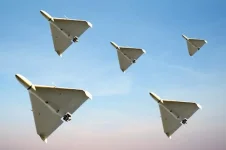
The Sheshnaag-150 is specifically designed for "collaborative loitering," where multiple units operate as a single, networked entity rather than individual aircraft.Its technical specifications place it in a strategic category between tactical drones and expensive cruise missiles:
- Operational Range: Exceeds 1,000 kilometres.
- Endurance: Over five hours of flight time.
- Payload: Capable of carrying warheads between 25 kg and 40 kg.
- Mobility: Recent trials in March 2026 demonstrated the drone being launched from a modified Toyota Hilux pickup truck, allowing for rapid deployment from rugged or unconventional terrain.
The "Mother-Code" and Autonomous Intelligence
The true innovation of the Sheshnaag-150 lies not in its airframe, but in its sophisticated software architecture, often referred to as the "mother-code." This algorithmic ecosystem enables the drones to communicate and redistribute mission tasks autonomously.If a single drone in the swarm is intercepted or if communication with the ground base is lost, the remaining units can recalibrate their flight paths and attack strategy without human intervention.
This decentralized intelligence ensures the strike remains effective even in high-threat environments saturated with electronic warfare and jamming.
Global Context and Future Outlook
The urgency behind the Sheshnaag-150 is mirrored globally, as seen in the widespread use of Shahed-style drones in recent international conflicts.To further enhance its resilience, NRT is reportedly developing visual navigation systems for the platform. This would allow the Sheshnaag-150 to navigate accurately using ground landmarks, making it immune to satellite (GPS) signal jamming.
By merging reconnaissance and strike capabilities into one cost-effective, autonomous architecture, India is positioning itself at the forefront of the next generation of algorithmic warfare.