When Prime Minister Narendra Modi landed in Athens in August 2023, it was the first visit by an Indian premier to Greece in four decades. Within six months, Greek Prime Minister Kyriakos Mitsotakis returned the gesture with a state visit to India, and the two sides elevated their ties to a formal “strategic partnership”, with explicit commitments on defence co‑production, maritime security and connectivity. At roughly the same time, India’s relations with Armenia—long cordial but low‑key—suddenly acquired steel: New Delhi became Yerevan’s principal arms supplier, signing deals for artillery, rockets and air‑defence systems and discussing co‑production of more advanced platforms.
These moves are not isolated diplomatic flourish. Together with Armenia’s growing convergence with Greece and Cyprus, they signal the emergence of an informal but increasingly coherent triangle: India–Greece–Armenia, knit together by shared anxieties about Turkish power, Pakistan’s militancy and Azerbaijan’s revisionism, and enabled by India’s rise as a defence exporter and Eurasian power. Opposite them stands a more visible and loudly proclaimed alignment: the Turkey–Pakistan–Azerbaijan (TPA) grouping, which has moved from rhetorical solidarity to formal trilateral summits, joint military exercises and coordinated diplomatic positions.
The strategic question is not whether India, Greece and Armenia intend to “destroy” the TPA bloc—international politics rarely works in such absolutes—but whether their converging interests are sufficient to constrain, complicate and ultimately blunt the leverage that Ankara, Islamabad and Baku have tried to build across South Asia, the Eastern Mediterranean and the South Caucasus. On current evidence, they are already doing so.
Two Rival Triangles Take Shape
Since 2017, Turkey, Pakistan and Azerbaijan have systematically institutionalised their cooperation. The Baku foreign‑ministers’ meeting that year was followed by parliamentary formats in 2021 and then by leader‑level summits in Astana (2024) and Lachin (2025–26), with communiqués stressing defence, energy, transport, and explicit mutual support on Nagorno‑Karabakh, Kashmir and Northern Cyprus. Joint military exercises—such as the 2021 “Three Brothers” drills—have reinforced interoperability and symbolism.The TPA axis rests on three pillars:
- Ideological and identity affinity: Shared Islamic identity and narratives of “brotherhood”, regularly invoked by leaders and parliaments.
- Mutual diplomatic backing: Azerbaijan backs Pakistan on Kashmir, Pakistan backs Azerbaijan on Karabakh, and both echo Turkey’s position on Northern Cyprus.
- Defence-industrial linkages: Pakistan has bought Turkish corvettes and attack helicopters; Azerbaijan has procured Turkish drones and signed a major deal for JF‑17 fighters co‑produced by Pakistan and China.
India’s rapprochement with Greece has transformed a civilisational relationship into a modern strategic partnership. Modi’s 2023 Athens visit and Mitsotakis’s 2024 trip to New Delhi produced agreements to double trade by 2030, co‑develop and co‑produce defence equipment, cooperate on cyber and maritime security, and position Greece as India’s key “gateway” into Europe through projects like the India–Middle East–Europe Economic Corridor (IMEC). In January 2026, the two defence ministers signed a joint declaration on defence industrial cooperation, and Greece committed to post a liaison officer at India’s Information Fusion Centre–Indian Ocean Region in Gurugram—symbolically anchoring Hellenic presence in the Indo‑Pacific security architecture.
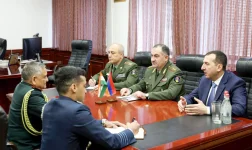
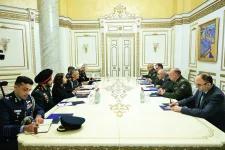
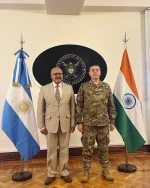
With Armenia, the transformation has been even starker. From 2020 onward, Yerevan—reeling from defeat in Nagorno‑Karabakh and Russia’s waning reliability—turned to India for artillery, rockets and radars. By 2024–25, Armenia had become India’s largest customer for finished weapons systems like the Pinaka multi‑barrel rocket launcher, 155‑mm artillery guns and Akash surface‑to‑air missiles, with contract volumes crossing roughly 600 million dollars and expanding toward multi‑billion‑dollar MoUs for air‑defence, missiles and potentially BrahMos co‑production. Armenia has appointed a defence attaché in New Delhi; India has reciprocated with its first defence attaché in Yerevan, marking a serious strategic bet in the Caucasus.
By 2025, commentators from Yerevan to Moscow were speaking explicitly of an “India–Greece–Armenia triangle” emerging as a counterweight to Turkey, Azerbaijan and Pakistan. The geometry of Eurasian politics was changing.
Shared Threat Perceptions: Why These Three Fit Together
The convergence among India, Greece and Armenia is driven less by romantic talk of “civilisational links” and more by hard‑edged, overlapping threat perceptions.- Turkey as a common denominator. Greece faces Turkish challenges in the Aegean and Eastern Mediterranean, from maritime boundary disputes to airspace violations and gunboat energy diplomacy. Armenia associates Turkey with historic trauma (the 1915 genocide) and with active support to Azerbaijan during the 2020 and 2023 offensives in Nagorno‑Karabakh, which emptied the enclave of Armenians. India sees Ankara as an increasingly vocal backer of Pakistan on Kashmir and a supplier of military hardware to Islamabad.
- The Pakistan factor. Pakistan is the only country that does not recognise Armenia as a sovereign state and has been a consistent diplomatic and, at times, military collaborator with Azerbaijan, including on training and arms. For India, Pakistan remains the principal source of cross‑border terrorism and nuclear‑shadow brinkmanship. Thus, Yerevan’s explicit support for India’s position on Kashmir and its public endorsement of India’s UN Security Council bid are not symbolic niceties; they fit into a wider pattern of counter‑balancing the Ankara–Baku–Islamabad nexus.
- Pan‑Turkic anxieties. For both Armenia and Greece, Turkey’s flirtation with pan‑Turkic narratives—linking Anatolia to the Caucasus and Central Asia—raises fears of encirclement. India, watching Turkey cultivate ties with Central Asian states and Pakistan, sees such narratives as potential vehicles for future influence in its extended neighbourhood.
Geography and Corridors: From Chabahar to Piraeus via Yerevan
India’s Eurasian strategy rests heavily on connectivity.To the north‑west, the International North–South Transport Corridor (INSTC) aims to connect India to Russia and Europe through Iran and the South Caucasus. Armenia has positioned itself as a key node in this vision, backing Indian plans to use Iranian ports like Chabahar and overland routes that transit Armenian territory. Armenia’s proposed “Crossroads of Peace” initiative—which seeks to reopen and expand regional road and rail links—aligns with India’s interest in diversifying access to Europe beyond the Suez choke point and Turkish‑controlled routes.
To the west, IMEC is designed to link Indian ports with the Gulf, Israel and then Greece’s Piraeus and other Mediterranean gateways, before radiating into continental Europe. Despite the setbacks caused by the Gaza war and fluctuating Gulf–Israel dynamics, India and Greece have insisted that IMEC remains viable and have framed it explicitly as an alternative to routes dominated by Turkey and, to some extent, by China’s Belt and Road.
In this cartographic logic:
- Armenia anchors India’s overland reach into the Caucasus and onwards to Eastern and Northern Europe.
- Greece anchors India’s maritime–continental bridge into Southern and Western Europe.
- Both sit on flanks that Turkey has historically sought to dominate—Eastern Mediterranean and South Caucasus—which makes their interest in Indian engagement even more acute.
Defence-Industrial Synergy: India as Arsenal, Greece and Armenia as Frontline States
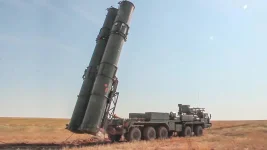
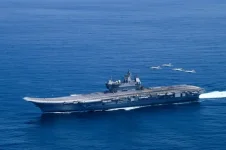
India’s rapid ascent as a defence exporter is the enabling technology of this triangle. Defence exports have multiplied several‑fold in a decade, reaching over 21,000 crore rupees in 2023–24 and projected to climb further, with Armenia among the top three customers alongside the United States and France.For Armenia, Indian systems such as the Pinaka rockets, ATAGS and MArG artillery pieces, Swathi weapon‑locating radars, anti‑tank guided missiles and Akash air‑defence systems collectively represent a generational leap towards a layered, NATO‑compatible defensive posture. Analysts note that the prospective acquisition of Pralay tactical ballistic missiles and Akash‑NG or MR‑SAM systems would give Yerevan a deterrent broadly comparable to Azerbaijan’s Israeli‑supplied precision systems. Armenia’s public showcasing of Indian Akash batteries and Pinaka launchers in early 2026 underlined both military and political messaging toward Baku and Ankara.
For Greece, co‑production and co‑development with India serve multiple ends. They allow Athens to diversify away from an over‑dependence on European and American suppliers, leverage India’s cost‑effective platforms, and plug into Indian shipbuilding, drone and electronics ecosystems. In return, India gains a European partner willing to lobby within the EU and NATO for Indian platforms and standards, while offering access to advanced Hellenic and European technologies in areas like sensors, naval architecture and aerospace.
The net effect is that India supplies much of the hard power, while Greece and Armenia provide the strategically contested geographies on Turkey’s western and eastern flanks. The TPA axis thus confronts an adversary whose defence‑industrial base is no longer confined within South Asia but extends into its own neighbourhoods.
Soft Power and Diplomacy: Undermining the TPA Narrative
The contest is not purely military. It is also about narratives, sanctions‑by‑other‑means, and diplomatic coalitions.India has quietly discouraged mass tourism flows to Turkey and Azerbaijan, wielding its enormous outbound travel market as a signalling device. This does not cripple their economies, but it chips away at the perception that they can oppose India on core issues like Kashmir without cost. Armenia’s public support for India’s right to defend itself during recent India–Pakistan clashes, and Azerbaijan’s reciprocal messaging in favour of Pakistan, have further clarified alignment lines in global information spaces.
In multilateral forums, Greece and Cyprus have used their EU membership to spotlight Turkish behaviour in the Aegean and Cyprus, while India has amplified concerns about terrorism and revisionism that point obliquely toward Turkey–Pakistan linkages. Armenia, for its part, has shifted steadily toward the EU and the United States, partly under French encouragement, making it harder for Russia or Turkey to monopolise Caucasus narratives.
This coordinated, if still loose, diplomatic choreography makes it more difficult for the TPA bloc to portray itself as an unchallenged champion of Muslim or “Global South” causes. Instead, Turkey and Pakistan increasingly find themselves facing a mosaic of regional players—India, Greece, Armenia, Cyprus, France, the UAE and others—who contest their framing of conflicts from Gaza to Kashmir and Karabakh.
How Far Can This Go in “Decimating” the TPA Bloc?
There are several concrete ways in which the India–Greece–Armenia convergence already constrains the Turkey–Pakistan–Azerbaijan grouping:Raising the military cost of adventurism.
- Armenia’s modernised artillery and air‑defence grid complicates any future large‑scale Azerbaijani offensive backed by Turkish assets, even if it does not guarantee deterrence.
- Greek access to cost‑effective Indian platforms and joint exercises could marginally improve Athens’ ability to sustain high‑intensity standoffs in the Eastern Mediterranean. Together, they erode the assumption that Ankara and Baku can translate military superiority into quick, low‑cost victories.
- To the west, India’s partnership with Greece and Cyprus reduces Ankara’s leverage over European connectivity projects and gas routes.
- To the east, India’s presence in Armenia and its patronage of INSTC‑linked projects weaken Turkey’s and Azerbaijan’s ability to dominate trans‑Eurasian corridors.
- The strategic depth Turkey sought through ties with Pakistan and Azerbaijan is thus increasingly contested from both flanks.
- Armenia’s endorsement of India’s Kashmir stance and refusal to recognise Pakistan underscore Islamabad’s isolation on that issue, beyond its traditional allies.
- As India’s military success and indigenous platforms gain visibility in Armenia and Greece, the appeal of Pakistani‑backed narratives about India as an unreliable or purely regional actor weakens.
The triangle is porous by design. France’s arms sales to Armenia, Gulf investments in Greek infrastructure, and US courtship of India all reinforce, rather than dilute, the emerging pattern. That makes it harder for TPA to escalate without triggering attention and counter‑measures from multiple major powers.
That said, “decimate” is too strong a term if understood as dismantling the TPA bloc. Turkey remains a G20 economy with a formidable defence industry. Pakistan, despite economic fragility, retains nuclear weapons and a large military. Azerbaijan still enjoys substantial energy revenues and interior lines in the Caucasus. Their trilateral format continues to expand, with recent summits pledging institutional mechanisms in trade, energy and defence.
What the India–Greece–Armenia triangle is doing is not erasing TPA, but re‑pricing its ambitions—raising the political, economic and military cost of coercive strategies, and narrowing the grey zones in which they can act with impunity.
Constraints and Risks for the India–Greece–Armenia Triangle
This counter‑alignment has real limitations.Geographical distance and logistics.
India is far from the Eastern Mediterranean and Caucasus. Sustaining large‑scale military support to Armenia in crisis scenarios, under the shadow of Russian, Turkish and Iranian equities, would be challenging.Balancing acts.
India still values energy ties with Russia and the Gulf, and maintains a pragmatic engagement with Azerbaijan as part of INSTC. Greece must operate within NATO and EU constraints. Armenia must avoid over‑reliance on any single patron after its experience with Russia.Escalation management.
As more external actors arm Armenia and strengthen Greece, there is a risk that miscalculation could trigger wider crises. Some analysts already worry about the South Caucasus becoming a theatre for proxy competition—exactly the kind of scenario India typically shuns.These constraints mean that the triangle is likely to remain an informal, flexible alignment rather than a treaty‑bound military alliance. Its power lies in shaping incentives and expectations, not in guaranteeing mutual defence.
Outlook: From Quiet Alignment to Enduring Architecture?
Looking ahead, several developments could deepen this strategic convergence:
- Institutionalisation of trilateral formats. Trilateral foreign‑ministers’ meetings, defence working groups or business councils among India, Greece and Armenia (possibly including Cyprus) would formalise what is currently an implicit strategic geometry. Early signs are visible in the India–Greece–Cyprus business and investment efforts and Armenia’s intensifying dialogues with both Athens and New Delhi.
- Joint exercises and defence co‑production. Greek participation in Indian naval exercises in the Indian Ocean, or Armenian observers in India–Greece drills, would send clear signals to Ankara, Baku and Islamabad without crossing hard red lines. Co‑production of select systems in Armenia or Greece—especially drones, munitions and sensors—could embed the triangle in industrial supply chains.
- Coordinated connectivity diplomacy. Aligning INSTC, IMEC and Armenia’s “Crossroads of Peace” under a shared narrative of open, rules‑based corridors would sharpen the contrast with power‑politics projects perceived as exclusionary or coercive.
In geopolitical terms, that is how “decimation” usually looks—not as a dramatic collapse, but as a gradual erosion of freedom of manoeuvre. On that metric, the new Eurasian triangle is already making itself felt.