The Distributed Aperture System (DAS) is a cornerstone of modern fifth-generation stealth fighters, turning the aircraft into a highly aware sensor node with a continuous 360-degree field of view.
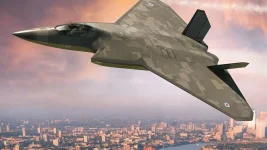
While India’s upcoming Advanced Medium Combat Aircraft (AMCA) takes conceptual cues from the F-35 Lightning II’s AN/AAQ-37 DAS, the two programs are fundamentally different in their design, underlying technology, and strategic intent.
This divergence highlights New Delhi's push towards sovereign, network-centric national defence capabilities.
Open Architecture vs. Closed Systems
The primary distinction lies in system control.The F-35's DAS, managed under tight US oversight, functions as a highly capable but proprietary system. Operators face strict limitations when attempting to update software, alter sensor logic, or integrate third-party weapons.
Conversely, India's Aeronautical Development Agency (ADA) and Defence Research and Development Organisation (DRDO) are building the AMCA's DAS on an open-architecture foundation.
This approach guarantees the Indian Air Force full access to source codes, allowing for unrestricted integration of domestic electronic warfare suites, AI algorithms, and custom threat libraries without requiring foreign approval.
A Generational Leap in Sensor Technology
Technologically, the F-35 relies on six mid-wave infrared (MWIR) sensors developed nearly two decades ago, although continuous updates are applied to newer production batches.The AMCA project benefits from a later development timeline. With prototype rollouts targeted for 2028–2029 following a ₹15,000 crore government approval, the indigenous fighter will leverage mid-2020s advancements.
Recent developments indicate that domestic firms like Bharat Electronics Limited (BEL) will provide High-Definition and Dual-Band infrared sensors.
These modern components promise superior thermal efficiency, enhanced sensitivity, and resilience against advanced electromagnetic jamming.
From Pilot Awareness to Drone Networking
Operationally, the F-35 utilizes its DAS primarily to boost pilot survivability, famously projecting an unobstructed view "through" the airframe directly into the pilot's helmet.The AMCA, particularly in its Mk2 configuration, expands this concept significantly.
Its DAS is engineered to function as a central data node capable of communicating in real time with unmanned platforms, such as the Combat Air Teaming System (CATS) Warrior drone.
This transforms the stealth fighter into a battlefield hub, allowing loyal wingman drones to target adversaries using the AMCA's sensor data.
Adaptive AI and Layered Infrared Tracking
The sensor fusion philosophies of the two aircraft also contrast sharply.The F-35 operates on predefined, periodically updated mission data files.
The AMCA intends to employ cognitive, AI-driven models that adapt dynamically to evolving battlefield threats using real-time data.
Furthermore, while the F-35 depends on its DAS and Electro-Optical Targeting System (EOTS) for thermal tracking, the AMCA will pair its comprehensive DAS with a dedicated, forward-looking Infrared Search and Track (IRST) system.
This dual-layered approach offers passive, long-range detection exceeding 100 kilometres, complementing the DAS's close-range spherical surveillance.
Streamlined Augmented Reality and Strategic Autonomy
Visual integration presents a final technical contrast.The F-35's advanced helmet depends on hardware-specific external feeds to display night vision and sensor data.
The AMCA ecosystem aims to channel DAS outputs seamlessly into a next-generation holographic augmented reality visor, streamlining the pilot's visual interface without the need for separate night vision hardware.
Ultimately, the most crucial difference is strategic.
While the F-35 operates one of the world's premier sensor systems, it remains tethered to its original developer.
By retaining absolute control over the DAS software, hardware integration, and upgrade pathways, India is ensuring its future frontline fighters can evolve independently, free from geopolitical or contractual constraints.