- Views: 3K
- Replies: 5
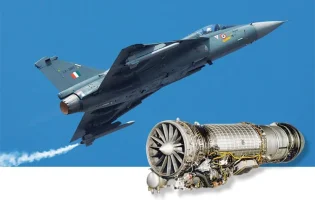
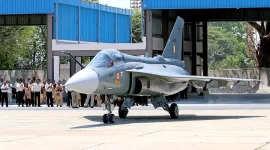
The induction of the indigenous Tejas Mk-1A fighter jet into the Indian Air Force (IAF) has reached a critical juncture.
Hindustan Aeronautics Limited (HAL) has officially declared that five aircraft are fully manufactured and ready for handover following successful weaponry trials.
However, defence sources indicate that the actual entry of these jets into combat service may face further delays due to pending certification processes and operational clearances required by the IAF.
Manufacturer’s Readiness vs. Operational Clearance
Speaking at a recent press conference in Hyderabad, HAL Chairman and Managing Director D.K. Sunil confirmed that the production line has delivered operationally relevant platforms.He stated that five Tejas Mk-1A fighters have successfully completed rigorous firing and missile trials, including the integration of the indigenous Astra Beyond Visual Range (BVR) missile and the British ASRAAM close-combat missile.
HAL intends to approach the IAF for the handover of these aircraft within the current financial year.
"Five aircraft are fully ready for delivery, incorporating major contracted capabilities," the company noted in a statement.
Additionally, HAL revealed that nine further airframes have been built and flown, currently awaiting the installation of GE F404 engines, which have faced supply chain delays from the United States.
The Certification Hurdle
Despite the manufacturer’s optimism, officials familiar with the induction process caution that "factory readiness" does not automatically translate to "combat readiness."Defence establishment sources report that the jets must still clear the final phase of Staff Qualitative Requirements (SQRs) before they can be formally inducted.
The IAF is reportedly scheduled to conduct a comprehensive review of the project in May 2026. The service is insisting on a "fully operational configuration," which involves more than just weapon firing.
The pending assessments include:
- Full Flight Envelope Validation: Ensuring the jet performs safely at all required speeds and altitudes.
- Avionics and Sensor Integration: The seamless functioning of the Uttam Active Electronically Scanned Array (AESA) radar and the electronic warfare (EW) suite.
- Reliability Checks: Demonstrating that the aircraft can be maintained and turned around quickly in frontline conditions.
The IAF’s cautious approach stems from the need to ensure that the new fleet can effectively replace the ageing MiG-21s in a networked battlespace.
The current situation highlights a natural tension between industrial milestones and military exigencies.
While HAL focuses on demonstrating manufacturing progress and successful weapon integration—such as the firing of laser-guided bombs—the Air Force remains steadfast on ensuring the equipment meets the harsh demands of modern warfare.
As the Tejas Mk-1A awaits its final clearances, the process serves as a reminder that trust in a combat system is built not just on technology, but on its proven ability to survive and fight in a complex battlespace.