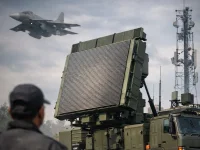
The Aeronautical Development Agency (ADA) and Hindustan Aeronautics Limited (HAL) have established an ambitious timeline for India’s fifth-generation fighter programme.
The agencies intend to begin the physical assembly of the first Advanced Medium Combat Aircraft (AMCA) prototype by late 2027, with a scheduled public rollout by the end of 2028.
Strategic Assembly and Component Sourcing
To meet these targets, officials have adopted an aggressive procurement strategy. Major orders for aircraft components and fuselage sections have already been initiated, with some pre-test samples currently arriving to validate manufacturing tools and integration workflows.The primary structural construction is slated to begin in mid-2027 once large-scale fuselage sections are delivered and placed on dedicated assembly jigs. By mid-2028, the airframe is expected to take its visible shape, incorporating internal weapons bays, propulsion systems, and foundational avionics.
Parallel Integration and Risk Mitigation
A significant factor in maintaining this schedule is the "technology bridge" provided by the Tejas Mk2 programme.Many of the mission systems, avionics, and electronic architectures designed for the Tejas Mk2 are being adapted for the AMCA.
By proving these technologies on the MkII first, engineers can de-risk the integration process for the more complex fifth-generation platform.
| Milestone | Expected Timeline |
|---|---|
| Arrival of Large Fuselage Sections | Mid-2027 |
| Commencement of Prototype Assembly | Late 2027 |
| Completion of Visible Airframe | Mid-2028 |
| Official Prototype Rollout | Late 2028 |
| Initial Flight Trials | 2029 |
Technical Specifications and Context
The AMCA is designed as a stealthy, multi-role fighter intended to bolster India's air defence capabilities.Open-source data indicates the platform will eventually feature:
- Stealth Features: Serpentine air intakes and internal weapons bays to reduce radar cross-section.
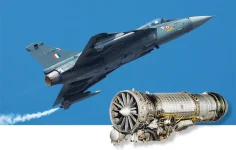
- Engine Evolution: Initial prototypes (Mark 1) will likely use the GE F414 engine, while the Mark 2 variant is expected to feature a higher-thrust engine co-developed with international partners like Safran or Rolls-Royce.
- Advanced Sensors: An indigenous GaN-based AESA radar and an integrated electronic warfare suite.
This method allows assembly to proceed as soon as a critical mass of components is available, rather than waiting for every minor subsystem, thereby compressing the overall development cycle.
If these milestones are achieved, the 2028 rollout will pave the way for a comprehensive flight testing campaign starting in 2029, marking a pivotal moment for India's self-reliance in aerospace technology.