- Views: 7K
- Replies: 16
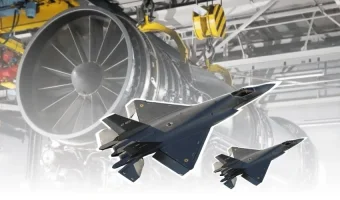
India’s roadmap for its fifth-generation fighter jet faces a significant realignment, with new projections indicating that the Advanced Medium Combat Aircraft (AMCA) Mk2 may not enter service before 2040.
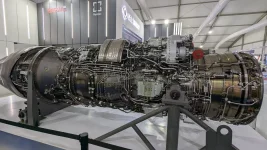
This potential delay stems from revised timelines for the indigenous 120 kN engine programme, a critical joint venture between France’s Safran and India’s Gas Turbine Research Establishment (GTRE).
While the collaboration remains strategically vital for India's self-reliance in defence technology, sources indicate that formal clearance for the engine deal is now expected only in 2026.
This shift has cast uncertainty over the induction schedule of the AMCA Mk2, the advanced variant originally slated to debut with this high-thrust propulsion system in the mid-2030s.
Revised Engine Development Timeline
According to information shared by sources linked to the programme, the development of the new high-thrust turbofan is entering a more extended and complex phase than previously anticipated. The first ground run of the new engine, utilizing a 'Dry Core' configuration, is now planned for 2032.This milestone will be followed by trials of both 'Dry' and 'Wet' prototype engines in late 2032 or early 2033, marking the commencement of true propulsion validation. However, experts caution that these initial tests are merely the starting point of a rigorous certification process.
Following ground evaluations, the engine must traverse a comprehensive series of aerial trials. These include expanding the flight envelope, validating thermal stress limits, testing reliability, and integrating the engine with the AMCA Mk2’s complex avionics and flight control systems.
Sources suggest that barring any major redesigns or failures, this complete test cycle is unlikely to conclude before 2037–38.
Impact on AMCA Mk2 Induction
The extended engine validation timeline places the AMCA Mk2 well outside its initial induction window. Even if the development process proceeds without friction, the aircraft would likely not be ready for service induction until 2040.A senior official described the original plan to induct the first Mk2 aircraft around 2035 as "no longer technically feasible within the compressed schedule," highlighting the disconnect between the engine's maturity curve and the airframe's readiness.
Interim Solutions and Strategic Workarounds
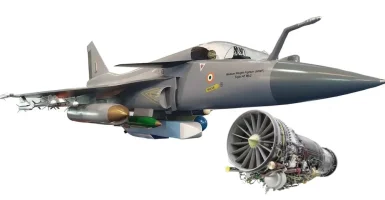
To mitigate potential capability gaps in the Indian Air Force (IAF) during the mid-2030s, officials are currently evaluating multiple internal proposals:- Expanded AMCA Mk1 Procurement: One option involves procuring additional units of the AMCA Mk1. This variant is powered by the existing American GE F414 engine (98 kN class) and is already on track for earlier deployment. Increasing its numbers would allow the IAF to continue fleet modernization while awaiting the indigenous engine.
- Retrofitting Strategy: A second proposal under discussion is to produce the initial batch of AMCA Mk2 airframes with the GE F414 engine, with a plan to retrofit them later. Sources have revealed that the new 120 kN Safran-GTRE engine is being engineered to fit within the existing F414 engine bay with minimal structural modifications. This "plug-and-play" compatibility aims to reduce redesign costs and prevent delays in airframe production.
The Critical Role of Propulsion
The delay underscores a fundamental challenge faced by fifth-generation fighter programmes globally: propulsion remains the single largest pacing factor.While the AMCA Mk1 will provide stealth capabilities, the shift to the Mk2’s indigenous, high-thrust powerplant is essential for unlocking the platform's full potential.
The new engine is required to enable "supercruise"—the ability to fly at supersonic speeds without using fuel-guzzling afterburners—as well as to support advanced thermal management for directed energy weapons and high-end stealth maneuvers.
Deal Expected in 2026
The partnership agreement with Safran is expected to be finalized before mid-2026, after which frameworks for long-lead items and core technology transfer will be locked in.However, any further postponement could push developmental milestones beyond the current estimates, making a pre-2040 induction increasingly impractical.
A senior source familiar with the negotiations noted that compressing the schedule to meet earlier targets is "nearly impossible" without compromising safety or performance.
Citing India’s past experience with the Kaveri engine and global benchmarks, the source reiterated that 12 to 15 years is a realistic timeframe for developing a clean-sheet, high-performance military turbofan.