- Views: 2K
- Replies: 2
In a significant move to enhance its aerial warfare capabilities, Armenia has entered into advanced discussions with India regarding the acquisition of the Astra beyond-visual-range (BVR) air-to-air missile system.
These negotiations highlight the deepening defence cooperation between Yerevan and New Delhi, occurring against the backdrop of Indian Chief of Defence Staff General Anil Chauhan’s official visit to Armenia in early February 2026.
The primary focus of the talks is the integration of the indigenous Astra missile onto Armenia’s existing fleet of Su-30SM fighter jets.
Defence sources suggest that the Armenian military is specifically targeting the Astra family of missiles, developed by India's Defence Research and Development Organisation (DRDO), which has recently cemented its status as a critical asset for the Indian Air Force (IAF).
The timing of this procurement interest is strategic; the IAF recently confirmed that the Astra Mk1 was operationally deployed during the border tensions of May 2025. Although no combat launches occurred, the deployment successfully verified the weapon's integration and readiness on frontline aircraft.
According to recent updates from the DRDO, the Astra Mk1 is undergoing a substantial performance enhancement.
The missile’s engagement envelope is being expanded from its original 110 kilometres to approximately 160 kilometres. Trials for this upgraded variant are scheduled for later this year.
Should the current negotiations be finalised before the year's end, it is understood that Armenia would likely receive this extended-range configuration, providing a potent boost to its air defence architecture.
India’s roadmap for the Astra programme extends even further. Plans are already in motion to equip the IAF's Su-30MKI fleet with the next-generation Astra MkII. This advanced variant is projected to offer a strike range exceeding 220 kilometres, placing it on par with some of the most sophisticated long-range air-to-air missiles operational globally. This evolution underscores India’s intent to significantly expand its air combat reach.
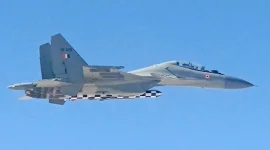
From a technical perspective, the integration of Indian missiles onto Armenian aircraft appears highly feasible. The Armenian Air Force operates four Su-30SM fighters, a derivative closely related to the Su-30MKI flown by India.
Experts note that this shared lineage simplifies the engineering challenge; the fire-control logic and sensor fusion algorithms already perfected for Indian jets can be adapted for the Armenian platforms with relatively minor modifications.
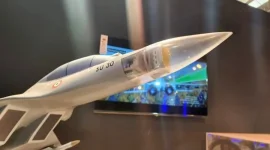
Reports indicate this "Super 30" style upgrade could also involve modernising the aircraft's radar and avionics to fully exploit the missile's capabilities.
For Yerevan, the deal offers a pragmatic solution to a critical capability gap.
Acquiring a proven BVR missile allows Armenia to drastically improve its air combat potential without the extended timelines and costs associated with adopting an entirely new weapons ecosystem.
Conversely, for New Delhi, this potential contract represents a pivotal shift from its historical role as a defence importer to an emerging exporter of high-tech weaponry. It serves as a validation of India’s indigenous design, testing, and manufacturing infrastructure.
If the deal is concluded successfully, the delivery of the 160-kilometre range Astra variant would provide Armenia’s compact Su-30 fleet with a credible long-range strike capability, potentially altering the regional balance of power.
Ultimately, these negotiations signal a broader transformation in the global defence market. Indian missile systems, once solely focused on domestic needs, are gaining recognition as combat-ready alternatives to traditional western or eastern suppliers.
The trajectory of the Astra missile—from Indian testing grounds to potential service in the South Caucasus—stands as a quiet yet powerful testament to India’s growing footprint in the international defence sector.