- Views: 2K
- Replies: 3
The Indian Air Force (IAF) is poised to significantly bolster its aerial dominance capabilities with the imminent operational clearance of the indigenous Astra Mk2 beyond-visual-range (BVR) air-to-air missile.
This clearance is expected to pave the way for a major induction programme, with reports indicating that the Air Force intends to place a bulk order for approximately 400 units of this next-generation weapon.
While initial timelines suggested a later induction, latest open-source data and defence reports indicate that frontline squadrons could begin receiving these advanced missiles as early as 2028, following the successful conclusion of final developmental trials and the establishment of robust production lines.
The Astra Mk2 constitutes a technological quantum leap over its predecessor, the in-service Astra Mk1.
The Defence Research and Development Organisation (DRDO) has successfully extended the missile’s engagement envelope from roughly 160 km to over 200 km.
This impressive range enhancement is primarily attributed to the optimisation of the missile's dual-pulse rocket motor and a refined internal configuration.
Unlike standard solid-fuel motors, the dual-pulse propulsion system allows the missile to effectively manage its energy profile—conserving fuel during the cruise phase and igniting a secondary pulse during the terminal phase.
This capability ensures high manoeuvrability and sustained energy during the 'endgame', drastically increasing the probability of a kill against agile hostile fighter jets.
To expedite deployment and meet the IAF's urgent operational requirements, the manufacturing phase is expected to be fast-tracked immediately after production approval.
In a strategic move to prevent supply chain bottlenecks, the DRDO is set to adopt a Development cum Production Partner (DCPP) model. This approach involves selecting two distinct production partners to manufacture the missiles simultaneously.
By creating redundancy and competition within the supply chain, this strategy aims to ensure timely deliveries and allow the IAF to rapidly rebuild its quantitative and qualitative edge in BVR combat capabilities.
From a strategic perspective, the induction of the Astra Mk2 is designed to restore the Indian Air Force's long-range engagement superiority vis-à-vis regional adversaries.
Defence analysts project that the Astra Mk2 will outperform the Chinese-supplied PL-15E missiles currently operated by the Pakistan Air Force.
The Indian missile reportedly holds a distinct advantage in terms of its terminal phase energy retention, advanced electronic counter-countermeasures (ECCM) suite, and overall kinematic performance, effectively neutralizing the threat posed by rival long-range systems in the region.
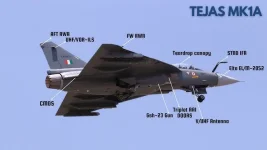
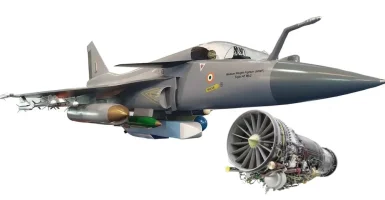
The initial phase of this large-scale induction will focus on integrating the Astra Mk2 with the IAF’s mainstay fighters: the Su-30MKI and the indigenous Tejas Mk1A.
Standardising this high-performance indigenous weapon across these key fleets will not only streamline logistics and maintenance training but also provide the IAF with a potent, uniform air combat capability capable of dominating future aerial engagements.