- Views: 3K
- Replies: 1
A senior official from BrahMos Aerospace has expressed unwavering confidence in the operational longevity of the BrahMos supersonic cruise missile, predicting that the weapon system will remain virtually impossible to intercept well into the next decade.
According to the official, the probability of a single BrahMos missile being shot down will remain negligible through mid-2035 and potentially up to 2040.
This assessment stands despite the rapid proliferation of advanced air defence technologies, such as elevated sensors and space-based tracking networks, which the official asserts the missile’s design is already capable of defeating.
The missile maintains a flawless combat record, with a theoretical interception rate of zero per cent in operational scenarios.
This capability was most recently validated during Operation Sindoor in May 2025, a series of precision strikes conducted by India against terrorist infrastructure in Pakistan.
During the operation, the Indian Air Force utilised Sukhoi-30MKI fighters to launch coordinated BrahMos salvos. Every deployed missile successfully evaded enemy air defences to neutralise its designated target, reinforcing the system's reputation as the backbone of India’s strategic conventional deterrence.
Drawing a comparison to recent geopolitical conflicts, the official highlighted the performance of the Russian P-800 Oniks missile in the Ukraine war as a benchmark for the BrahMos’s survivability.
The P-800, which serves as the technological precursor to the BrahMos, faced sophisticated Western-backed air defence networks yet recorded an interception rate of only approximately 6 per cent.
Defence experts attribute this low interception capability to the physics of supersonic sea-skimming; by flying at speeds of Mach 2.8 to Mach 3 at altitudes as low as 10 to 15 metres, these missiles hide below the enemy’s radar horizon, leaving air defence batteries with only seconds to react once the threat becomes visible.
Looking towards the future threat landscape of 2040, the official acknowledged that regional adversaries, including Pakistan and China, are investing heavily in counter-measures.
These include Gallium Nitride (GaN)-based Active Electronically Scanned Array (AESA) radars and high-velocity interceptors designed to track supersonic threats.
However, even in a "worst-case" scenario where these technologies are fully fielded, the official projects that the interception rate for BrahMos would likely cap at a mere 15-20 per cent.
The complexity and financial burden of integrating such advanced shields across a wide border make their full implementation unlikely, preserving the BrahMos’s tactical advantage.
The enduring dominance of the BrahMos is rooted in its unique flight characteristics. The missile combines raw speed (Mach 2.8-3) with a complex guidance suite involving inertial navigation and satellite updates.
Crucially, in its terminal phase, the missile performs a high-G "S-manoeuvre," weaving unpredictably to evade close-in weapon systems.
Since its inception, the platform has evolved significantly, with range capabilities extending from the original 290 km to variants capable of striking targets 450 km to 900 km away, providing commanders with versatile options across land, sea, and air domains.
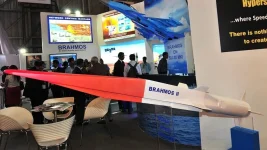
To ensure continued superiority beyond the 2040 horizon, development is already underway for the BrahMos-2, a hypersonic successor to the current lineage.
Expected to undergo its first flight tests around 2028, this variant will fly at speeds exceeding Mach 7—more than double that of the current model.
Powered by scramjet technology, the BrahMos-2 will utilise immense kinetic energy and hypersonic glide trajectories to render current air defence systems obsolete, securing India’s deep-strike capabilities for another 20 to 30 years.