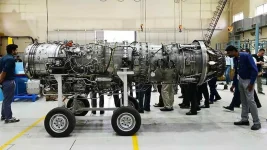
New Delhi-based aerospace startup DG Propulsion, founded by Prateek Dhawan and Chirag Gupta, recently revealed its initiative to build a 10-kilonewton (kN) class jet engine.
This ambitious project shifts the company's focus from smaller micro-turbojets toward substantially larger propulsion systems.
For the firm, this advancement is a crucial leap toward becoming a cornerstone in India's expanding domestic aero-engine manufacturing sector.
The private enterprise concentrates on engineering and producing compact gas turbine systems and jet engines suited for both civilian and defence requirements.
Historically, Indian aerospace platforms have been heavily dependent on costly foreign engines.
Over recent years, DG Propulsion has actively worked to replace these imports by creating homegrown powerplants for cruise missiles, unmanned aerial vehicles (UAVs), and target drones, often utilising advanced manufacturing techniques like 3D printing and rapid prototyping to accelerate development.
This latest declaration comes on the heels of the successful testing of the company's J-40 micro-turbojet.
Designed to deliver high power in a compact form factor, the J-40 engine surpassed the 40-kilogram thrust (roughly 392 Newtons) requirement during live trials.
Achieving this benchmark proves the startup's capacity to build and evaluate local turbine engines, confirming their expertise in complex areas like turbine efficiency, digital engine controls, combustion stability, and compressor architecture.
Capitalizing on the success of the J-40 program, the company is now directing investments into advanced, modular testing facilities.
This new infrastructure will be designed to handle and evaluate engines that generate up to 10 kN of thrust.
Establishing such a high-capacity testbed will allow the firm to securely validate much larger aerospace engines and pave the way for upcoming turbofan projects.
Engines within the 10 kN thrust category hold a vital position in the modern aerospace industry.
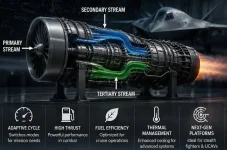
Powerplants of this size are ideally suited for heavy-duty unmanned aerial vehicles, swift target drones, stealthy unmanned combat aerial vehicles (UCAVs), cruise missiles, and various experimental flight systems.
Furthermore, mastering this thrust class acts as an essential stepping stone for the company to eventually design and produce even larger, high-performance turbofan engines.
Creating reliable jet engines is widely regarded as one of the most difficult engineering challenges in the aviation world. For decades, India has had to rely on international manufacturers to supply turbine engines for its military and commercial fleets.
The rise of local enterprises that can engineer and assemble these systems internally is a major advantage, directly reducing foreign dependency and ensuring long-term technological independence.
Aerospace experts highlight that building an engine of this scale demands breakthroughs in high-temperature metallurgy, precision machining, airflow dynamics, and advanced digital controls.
Despite these steep requirements, the practical knowledge acquired while developing the J-40 engine, combined with their upcoming state-of-the-art testing infrastructure, gives DG Propulsion a solid technical foundation to overcome these complex hurdles.
This initiative fits perfectly into the government's Atmanirbhar Bharat (Self-Reliant India) vision, which aims to cultivate a robust and independent local defence manufacturing sector.
With India continuously increasing its focus and financial backing for advanced loitering munitions, cruise missiles, and next-generation drones, the domestic market's need for homegrown, cost-effective jet propulsion solutions is projected to surge in the coming years.