- Views: 3K
- Replies: 2
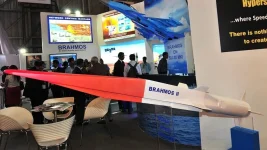
India’s defence sector has marked a significant milestone with the advancement of the Long Range Anti-Ship Hypersonic Missile (LRAShM), a weapon system designed to dramatically enhance the nation's maritime strike capabilities.
Recently showcased during the 77th Republic Day parade in January 2026, the missile represents a pragmatic shift in design philosophy by the Defence Research and Development Organisation (DRDO).
By prioritizing the integration of mature, combat-proven technologies over purely experimental designs, DRDO aims to fast-track the missile’s induction into the armed forces.
Building on Proven Strategic Propulsion
The core propulsion of the LRAShM is anchored in the solid rocket booster of the B-05 (also known as K-15 Sagarika) submarine-launched ballistic missile (SLBM).The B-05 was a landmark achievement for India, serving as the primary weapon for the Arihant-class nuclear submarines with a range of approximately 750 kilometres.
Adapting this specific booster is a strategic masterstroke.
Since the B-05 has already withstood the rigorous qualification processes required for underwater launches and high-stress flight environments, DRDO has effectively bypassed the most risky and time-consuming phase of hypersonic development: the propulsion system.
This solid booster rapidly accelerates the LRAShM to hypersonic speeds (reported to exceed Mach 10 during peak phases) and high altitudes.
Once this initial boost phase is complete, the missile transitions into a "skip-glide" or quasi-ballistic trajectory, allowing it to manoeuvre unpredictably while closing in on its target.
Leveraging Combat-Tested Guidance
While speed provides survivability, precision ensures lethality.For terminal guidance, the LRAShM utilizes an active seeker architecture derived from the BrahMos supersonic cruise missile.
The BrahMos is globally renowned for its accuracy and reliability in complex maritime conditions.
By adapting its seeker technology, the LRAShM inherits a proven ability to discriminate specific targets—such as aircraft carriers or destroyers—within a larger naval formation.
This combination allows the LRAShM to engage moving warships effectively.
Unlike traditional ballistic missiles that follow a predictable arc, this hypersonic weapon can adjust its flight path in real-time, making it exceptionally difficult for modern air defence systems to track or intercept.
Evolution Over Experimentation
The convergence of the B-05’s propulsion and the BrahMos’s guidance systems signifies an evolutionary approach to weapons development.Rather than waiting for entirely new subsystems to be invented, DRDO has utilized components that are already in serial production.
This compatibility with India’s existing industrial ecosystem reduces supply chain risks and ensures that the missile can be manufactured at scale relatively quickly.
Strategic Impact and Future Outlook
Open-source reports indicate that the LRAShM has a strike range of over 1,500 kilometres, which may be extended to 3,000 kilometres in future variants.This places it in the elite category of "carrier killer" weapons, providing the Indian Navy with a credible anti-access/area-denial (A2/AD) capability in the Indian Ocean Region.
By compressing the development timeline through the intelligent reuse of technology, India is positioned to field this advanced hypersonic capability far sooner than many global competitors.
The successful flight tests conducted in late 2024 and the system's public debut in 2026 underscore the effectiveness of this strategy, promising a potent deterrent against evolving naval threats.