- Views: 7K
- Replies: 15
The timeline for India’s ambitious Light Combat Aircraft (LCA) Mk2 programme has received a major boost following a confident assertion by the country’s top defence scientist.
Dr Samir V Kamat, Chairman of the Defence Research and Development Organisation (DRDO), has officially stated that the indigenous fighter jet is expected to make its maiden flight between June and July 2026.
This significant update was shared during the latest episode of Raksha Sutra, the Ministry of Defence’s official podcast.
Dr Kamat’s remarks indicate a high level of institutional confidence in the maturity of the aircraft’s design and the pace of its execution, signalling that the programme is moving swiftly toward its next critical phase.
A Definitive Timeline for the 'Medium Weight Fighter'
According to the DRDO Chief, the decision to target the June–July 2026 window is based on rigorous internal assessments regarding design finalisation, subsystem integration, and pre-flight clearances.If this schedule is met, it will mark a pivotal moment for Indian military aviation. The LCA Mk2 is not merely an upgrade but a substantial evolution over the existing Tejas Mk1/Mk1A variants.
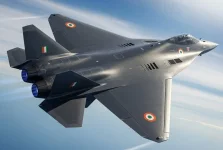
Often referred to as a Medium Weight Fighter (MWF), the Mk2 is designed with a Maximum Take-Off Weight (MTOW) of 17.5 tonnes, significantly heavier than the 13.5-tonne Mk1A.
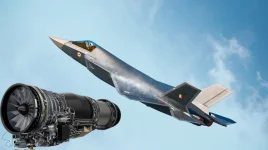
It will be powered by the robust General Electric F414-INS6 engine, generating 98 kN of thrust, and will feature close-coupled canards for improved manoeuvrability.
This platform is envisioned as the bridge to India’s future fifth-generation fighter programmes, such as the Advanced Medium Combat Aircraft (AMCA).
The Challenge of a Compressed Schedule
The announcement has sparked intense discussion among defence analysts regarding the tightness of the schedule.Hindustan Aeronautics Limited (HAL) has reportedly planned the rollout of the first LCA Mk2 airframe for late March or early April 2026. Industry observers note that a June–July first flight implies a highly aggressive "compressed" timeline.
Traditionally, the period between an aircraft’s rollout and its first flight spans roughly six months. This interim phase involves a battery of critical ground-based activities, including:
- Systems Integration Checks: Ensuring all avionics and mechanical systems "talk" to each other.
- Power-On Tests: Bringing the aircraft to life electrically.
- Engine Ground Runs: Static testing of the GE F414 engine within the airframe.
- Taxi Trials: Low and high-speed runs on the runway to validate ground handling.
- Flight Control Validation: Checking the digital fly-by-wire laws.
Strategic Advantages of an Early Flight
Meeting the June–July 2026 deadline would offer several strategic benefits to the programme.An earlier entry into the flight-test phase would allow for the faster accumulation of data, enabling engineers to identify and rectify design issues sooner. This rapid feedback loop is essential for clearing downstream milestones, particularly weapons integration and Final Operational Clearance (FOC).
The Indian Air Force (IAF) is closely monitoring these developments, as the LCA Mk2 is slated to replace ageing fleets of Mirage 2000, Jaguar, and MiG-29 aircraft. A delay-free development cycle is crucial for maintaining the IAF's combat squadron strength.
Communication through 'Raksha Sutra'
The revelation also highlights the growing importance of the Raksha Sutra podcast as a medium for transparency.By using this platform to communicate directly with the public, the defence leadership is underscoring the government's commitment to the "Atmanirbhar Bharat" initiative in defence manufacturing.
While the actual execution on the tarmac will be the final judge, the DRDO Chief’s public commitment to this window serves as a strong signal of alignment and urgency across India’s aerospace ecosystem.