India's Defence Research and Development Organisation (DRDO) is gearing up to evaluate a Next Generation (NG) variant of the Shaurya surface-to-surface hypersonic missile.
Built for rapid, highly precise strikes from a canister-based launch system, this upgraded weapon aims to vastly improve its ability to survive and outmanoeuvre advanced enemy missile defence networks during the final moments of its flight.
The foundational Shaurya system—widely considered the land-based counterpart to the submarine-launched K-15 Sagarika missile—was first tested in 2008 and boasts an operational range of 700 to 1,000 kilometres.
It forms a crucial part of India's strategic deterrent arsenal and was historically developed to strengthen the country's nuclear triad under the Strategic Forces Command.
The missile travels at hypersonic speeds and is housed in a canister, ensuring it can be fired swiftly from mobile platforms with very little setup time.
Rather than travelling in a standard, predictable arc like older ballistic weapons, the Shaurya employs a pseudo-ballistic trajectory. This allows the missile to alter its course mid-flight, making it remarkably challenging for hostile forces to track and intercept.
A central feature of the upcoming Shaurya NG trials is the introduction of a domestically engineered multi-mode seeker, specifically designed to function in extreme hypersonic environments.
As the missile blazes through the atmosphere at speeds surpassing Mach 7 (over 8,500 kilometres per hour), air friction generates intense heat and surrounds the weapon in a plasma sheath. This barrier of ionised gas typically blocks radio signals, blinding traditional guidance equipment.
To overcome this hurdle, DRDO experts have integrated Active Radar with Imaging Infrared (IIR) technologies into a single seeker.
Proving that this new system can continuously track targets despite the plasma interference will mark a major breakthrough in India's hypersonic guidance capabilities.
The NG variant also brings substantial enhancements to the missile's agility during the critical terminal phase, which spans the last 30 to 60 seconds before it hits the target. In these final moments, the Shaurya NG is programmed to execute violent, high-G "jinking" movements.
Because the weapon is hurtling towards the earth at roughly 2.5 kilometres per second, these sudden zig-zag flight corrections render it virtually immune to modern anti-missile interceptors.
Much of the Shaurya's survivability stems from its unique flight profile.
Following ignition, the missile climbs to an altitude of approximately 50 kilometres. Instead of continuing upward into space, it levels off to maintain a horizontal path within the upper atmosphere.
By remaining inside the atmospheric layer at speeds reaching Mach 7.5, the weapon can rely on aerodynamic fins to steer itself.
This potent blend of blistering speed and continuous atmospheric control prevents enemy radar operators from calculating its ultimate destination until just moments before impact.
Significant upgrades have also been applied to the missile's storage and firing infrastructure.
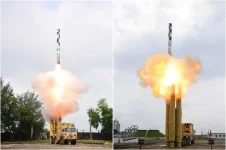
The Shaurya utilises a "cold launch" technique, wherein a gas generator pops the missile out of its tube before the primary rocket engine safely ignites in mid-air, thereby protecting the mobile launch platform from blast damage.
The 2026 tests will evaluate a newly reinforced composite canister that requires almost no upkeep. Programme estimates suggest this advanced casing will allow the Shaurya NG to sit in a state of operational readiness for 10 to 15 years.
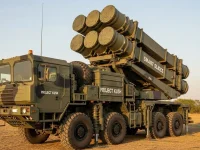
Furthermore, the weapon can be mounted on a Transporter Erector Launcher (TEL) and prepared for launch in under five minutes, granting military forces immense tactical flexibility and rapid-response capabilities.
Ultimately, the creation of the Shaurya NG underscores DRDO's ongoing commitment to fortifying India’s strategic deterrence against increasingly sophisticated global missile defence shields.
By fusing the raw velocity of a ballistic weapon with the precise steering of a cruise missile, this upgraded platform ensures that India maintains a decisive and highly survivable strike capability well into the future.