Exploring a partnership in a European sixth-generation fighter programme is a necessary, albeit unsurprising, move for India, according to defence analyst Angad Singh.
Speaking recently to NDTV, Singh noted that India’s defence procurement cycle and technological integration have historically lagged behind global standards.
This delay has forced the country into a continuous game of catch-up, a precarious position given the increasingly hostile and unpredictable nature of its immediate geopolitical neighbourhood.
The Urgency of Next-Generation Air Power
The current regional security environment leaves no room for complacency, driving an urgent need for state-of-the-art aerial combat capabilities.Singh emphasised that India must actively seek partnerships with nations holding advanced aerospace technologies. Doing so offers a chance to leapfrog current technological generations and bridge existing vulnerabilities.
Open-source intelligence highlights this pressing reality: regional rivals are already fielding fifth-generation platforms like the J-20 and J-35, and are reportedly conducting flight tests for distinct sixth-generation prototypes (such as the J-36 and J-50).
Time is of the essence; hesitation now could lead to a repeat of previous procurement disasters.
Lessons from the FGFA Misstep
The primary cautionary tale is the Fifth Generation Fighter Aircraft (FGFA) initiative, a collaborative attempt with Russia that ultimately collapsed.India entered that agreement late in the development cycle, faced persistent technical and financial disagreements, and eventually abandoned the project after sinking significant funds into it. A decade later, the Indian Air Force is still searching for similar capabilities.
However, Singh pointed out a silver lining in the current scenario: by engaging now, India has the rare advantage of joining a programme at its inception rather than playing a costly supporting role midway through.
Choosing a Path: GCAP vs. FCAS
Currently, two major European consortia are developing "system of systems" sixth-generation platforms:- Global Combat Air Programme (GCAP): A joint venture between the UK, Italy, and Japan, targeting deployment around 2035.
- Future Combat Air System (FCAS): A collaboration involving France, Germany, and Spain, aiming for entry into service closer to 2040.
What India Brings to the Table
While the exact technical contributions remain highly classified, the most immediate benefit India offers is massive financial relief.Developing a sixth-generation fighter is an astronomically expensive endeavour—often projected to cost upwards of €100 billion.
An order commitment from India would significantly subsidise development costs and stabilise project timelines.
Beyond capital, India’s expanding defence industrial base offers valuable expertise in software, systems integration, and complementary technologies.
Furthermore, because the French-led FCAS must accommodate carrier-based operations for the French Navy, it naturally aligns with the Indian Navy’s own future requirements for advanced carrier-borne fighters.
European Friction and Strategic Risks
The FCAS programme has recently been plagued by severe industrial friction and intellectual property disputes, particularly between France's Dassault Aviation and Germany's Airbus.Ironically, these internal European delays have created a strategic window for India to enter as a core partner.
Given the Indian Air Force's deep, pre-existing familiarity with French aerospace ecosystems through the Rafale fleet, plugging into a French-led initiative appears seamless.
Nevertheless, Singh warned that relying on a coalition hampered by internal political rifts carries inherent risks of further delays.
Balancing Act: The Indigenous AMCA
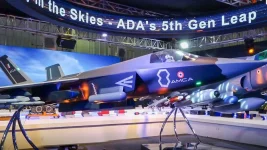
A major policy dilemma is how a foreign partnership will impact India's domestic Advanced Medium Combat Aircraft (AMCA).The AMCA is a ₹15,000-crore project designed to deliver a 5.5-generation stealth fighter, with prototype flights targeted for 2029 and production slated for the mid-2030s.
Committing vast resources and capital to a European sixth-generation fighter aiming for a similar timeline risks splitting focus, potentially sidelining India’s indigenous manufacturing ambitions.
Ultimately, despite the strategic and financial complexities, Singh views early integration into a global programme as a necessary step.
Securing a seat at the table now ensures that the final aircraft will be directly tailored to counter India's specific regional threats and operate effectively within its unique geographical extremes.