- Views: 4K
- Replies: 12
In the realm of military aviation, countries typically align with either Western precision or robust Russian engineering.
India, however, forged an entirely different path with the Sukhoi Su-30MKI, creating what experts often call the “Frankenstein of the skies.”
By marrying a durable Russian airframe and engines with cutting-edge electronics from France, Israel, and India, the Su-30MKI emerged as one of the most distinctive multirole jets in modern warfare.
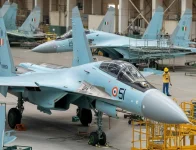
Today, with a fleet of nearly 280 aircraft, it stands as the undeniable backbone of the Indian Air Force (IAF).
Born from Soviet Collapse
The concept for the Su-30MKI took root in the 1990s following the dissolution of the Soviet Union, a period when Russia’s aerospace sector faced an existential crisis. Sukhoi experienced severe funding shortages, with halted production lines and unpaid staff.Meanwhile, India required a heavy, next-generation fighter to secure its vast skies against regional adversaries. While the IAF prized the heavy payload, extended range, and sheer durability characteristic of Russian jets, it also coveted the sophisticated sensors and avionics found in Western models.
Instead of purchasing an off-the-shelf foreign jet with standard limitations, India proposed an unprecedented joint venture: Russia would construct the physical platform, while India would spearhead the integration of international and indigenous technology.
This collaboration birthed the Su-30MKI—standing for “Modernizirovannyi Kommercheskiy Indiski” (Modernised Commercial Indian).
The agreement successfully delivered a premier fighter to India while providing a critical financial lifeline to Sukhoi during a turbulent era.
A Masterclass in Multinational Integration
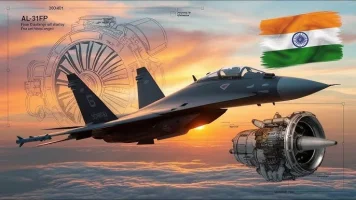
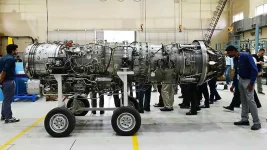
The defining trait of the Su-30MKI is its seamless fusion of global technologies.Housed within a formidable Russian airframe powered by AL-31FP engines, the cockpit and avionics represent a truly international effort. Key components include:
- French navigation systems and head-up displays (HUD).
- Israeli electronic warfare (EW) suites.
- An Indian-designed mission computer that synchronises these diverse systems.
- A mixed arsenal of advanced Russian and Indian weaponry.
It demanded complex software architecture and rigorous testing, culminating in one of the most intricately designed hybrid fighters ever flown.
Unmatched Agility Through Thrust Vectoring
The Su-30MKI is globally renowned for its extraordinary manoeuvrability, largely due to its thrust-vectoring engines.Unlike standard jets where exhaust points directly backwards, the Su-30MKI's nozzles can pivot in multiple directions, enabling rapid mid-air directional shifts.
When paired with forward canards (small secondary wings), the jet can execute extreme aerial feats, such as the legendary Cobra manoeuvre, rapidly pitching its nose up to bleed speed before regaining control.
This agility is lethal in close-quarters dogfights, granting pilots a decisive edge.
Furthermore, the ability to perform sudden, high-angle turns acts as a defensive mechanism, helping the aircraft break enemy radar locks and evade incoming missiles.
The Strategic Backbone of India’s Air Defence
India has invested heavily in the Su-30MKI, with Hindustan Aeronautics Limited (HAL) domestically assembling the majority of the fleet.Deployed across the nation—from the coastal borders to the high altitudes of the Himalayas—the jet forms the core of India’s air defence network.
The fighter has also proven its mettle in active combat scenarios.
During the 2019 aerial engagements between India and Pakistan, IAF Su-30MKIs were reportedly targeted by AIM-120 AMRAAM missiles fired from Pakistani F-16s.
The Indian jets successfully neutralised the threat, relying on their superior manoeuvrability and advanced electronic warfare countermeasures to evade the attacks.
Evolution into a Strategic Strike Platform
The Su-30MKI has evolved far beyond its air-to-air roots into a formidable long-range strike platform.The integration of the supersonic BrahMos cruise missile allows the jet to launch devastating anti-ship and land-attack missions from the sky.
Travelling at speeds approaching Mach 3, an air-launched BrahMos delivers immense kinetic destruction.
Regular patrols over the Indian Ocean region by BrahMos-equipped Su-30MKIs serve as a potent deterrent against maritime threats.
Su-30MKI vs. F-15EX: A Tactical Comparison
Analysts frequently draw comparisons between the Su-30MKI and the American Boeing F-15EX Eagle II, as both are heavy, twin-engine multirole fighters.| Feature | F-15EX Eagle II Advantages | Su-30MKI Advantages |
|---|---|---|
| Performance | Superior top speed; higher missile capacity | Unmatched manoeuvrability via thrust vectoring |
| Sensors | Highly advanced AESA radar out-of-the-box | Rapidly upgrading to indigenous AESA systems |
| Economics | High acquisition cost (~$90 million per jet) | Highly cost-effective (~$45 million per jet) |
The Su-30MKI's economic advantage has allowed India to field a much larger fleet. Additionally, lower operational costs facilitate more flight hours for pilots, ensuring higher overall combat readiness.
The "Super Sukhoi" Future
To ensure the fighter remains a dominant force well into the 2050s, India is actively advancing the comprehensive "Super Sukhoi" upgrade programme.As of early 2026, the Defence Research and Development Organisation (DRDO) has commenced prototype fabrication and testing for several critical components. This sweeping modernisation will introduce:
- The Virupaksha AESA Radar: An advanced, indigenous radar utilising cutting-edge Gallium Nitride (GaN) technology, expected to boost detection ranges up to 400 kilometres.
- BrahMos-NG Integration: A smaller, lighter next-generation variant of the BrahMos missile. Recent reports indicate a single Su-30MKI will be capable of carrying up to five of these stealthy, high-speed weapons.
- A modernised digital glass cockpit.
- Next-generation electronic warfare systems.
By combining Russian physical dominance with Western precision and Indian innovation, the aircraft continues to redefine the paradigm of modern fighter development.