- Views: 3K
- Replies: 8
India’s prospective purchase of 114 Dassault Rafale fighter jets under the Multi-Role Fighter Aircraft (MRFA) programme represents more than a simple numerical boost to the Indian Air Force (IAF).
Recent reports indicate that the concluding squadrons of this massive ₹3.25 lakh crore deal could be supplied in the cutting-edge F5 configuration.
Out of the 114 jets, while the majority are expected to be the F4 variant, the final 24 could be delivered as the next-generation F5 standard starting around 2030, providing the IAF with the most technologically advanced and future-proof iteration of the French combat aircraft.
The "Super Rafale" Evolution
Throughout its service life, the Rafale has undergone continuous upgrades, with each new standard introducing better avionics, sensor fusion, and weapons capabilities.However, the forthcoming F5 standard—often dubbed the "Super Rafale"—is anticipated to be a monumental leap rather than a routine update. It is designed to act as a crucial bridge between current fifth-generation capabilities and future sixth-generation platforms.
For the Indian military, integrating the F5 standard into the final batches would unlock vastly superior processing capacities, enhanced network-centric warfare tools, and broader weapon compatibility.
Notably, the F5 will introduce fibre-optic cabling, a revolutionary Gallium Nitride (GaN) radar, and the ability to seamlessly control accompanying unmanned "loyal wingman" drones for high-risk missions, significantly expanding the combat ecosystem.
Introducing the M88 T-REX Engine
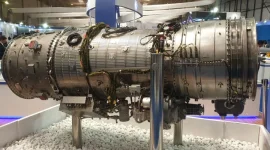
Presently, India’s operational Rafale jets are powered by the Safran M88 engine, which produces roughly 75 kilonewtons (kN) of thrust.In contrast, the F5 variant will be equipped with a next-generation power plant known as the M88 T-REX (Thrust Range Extension).
Unveiled by Safran, this upgraded engine is engineered to deliver approximately 90 kN of thrust, providing a 20 per cent increase in power through an improved low-pressure compressor and advanced cooling materials.
This jump of 15 kN is a substantial performance multiplier. It provides the aircraft with faster acceleration, superior operation at high altitudes, and increased payload capacities, all of which are vital for surviving heavily contested airspace.
For an omnirole fighter tasked with carrying heavy, long-range munitions, this extra power is a distinct operational advantage. Furthermore, the increased thrust allows the jet to take off from shorter runways and remain in combat longer, even when loaded with external fuel tanks and heavy armaments.
Seamless Fleet Standardisation
Perhaps the most significant advantage of this engine evolution is its modularity; the M88 T-REX is designed to fit perfectly into the existing engine bay without requiring structural alterations to the airframe.If the IAF adopts the F5 standard for its latest deliveries, it opens a seamless pathway to retrofit the older Indian Rafale fleet (currently at the F3R standard) with the new 90 kN engines over time.
Such an upgrade cycle would not only standardise maintenance but is also necessary to power the next generation of energy-intensive electronic warfare suites and heavy weapon systems.
As aerial warfare evolves, the addition of long-range standoff missiles, advanced jamming pods, and modern sensors inherently increases the weight and electrical demands placed on a fighter jet. Transitioning to the T-REX engine ensures that the entire fleet remains capable of handling these modern combat requirements.
The F5 standard itself is slated to integrate heavy next-generation munitions, including hypersonic nuclear-capable missiles and advanced anti-ship systems, making the higher-thrust engine essential to maintain peak flight performance.
Bridging the Gap to Indigenous Stealth
By adopting this strategy, the IAF ensures that its future squadrons will boast maximum kinetic flexibility, while providing a clear roadmap to upgrade earlier variants.This unified approach eliminates the logistical nightmare of operating a highly fragmented fleet with mixed technical standards. Over the coming decades, India could successfully consolidate its entire Rafale inventory into a single, highly capable configuration.
With the Defence Acquisition Council (DAC) having recently cleared the Acceptance of Necessity for the 114 jets, deliveries of the final, domestically manufactured batches could align perfectly with the early 2030s.
By this period, India’s strategic requirements will heavily depend on extended-range engagements and absolute air dominance.
Securing the F5 standard and the T-REX engine guarantees that India’s imported fighter fleet remains at the bleeding edge of technology, effectively holding the line while indigenous projects, like the Advanced Medium Combat Aircraft (AMCA), are fully developed and deployed.